

The calcium-based materials sector has been busy in September. From Jiangxi to Guangxi, a batch of projects with investment running from several hundred million to RMB 2 billion has been publicised and pushed forward, with strikingly similar product lists: nano calcium carbonate and high-specific-surface-area calcium hydroxide. That stands in contrast to ordinary ground calcium carbonate, where overcapacity and a persistent price war are the norm.
1. Projects Landing in September
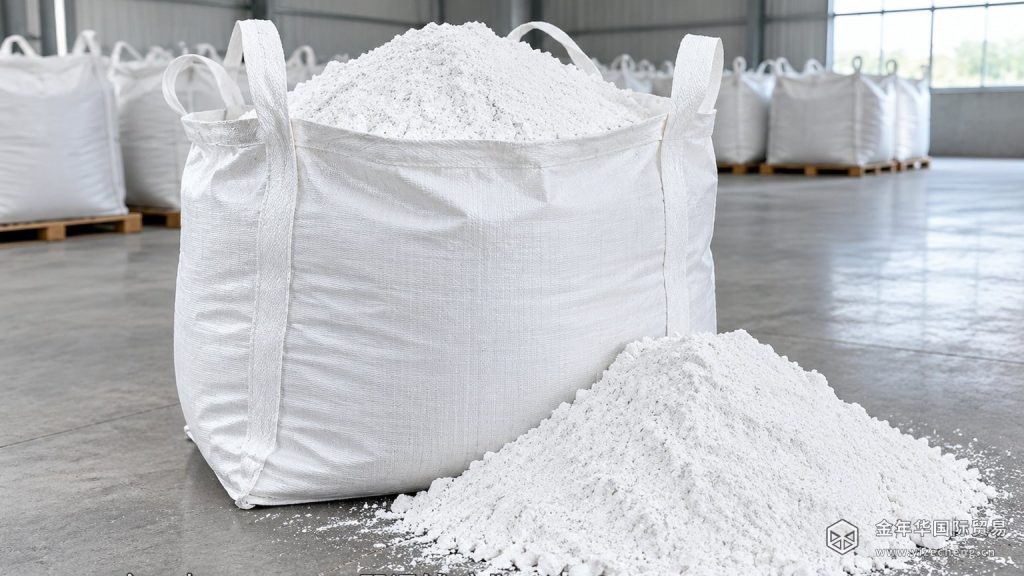
A nano calcium carbonate project in Yiyang, Jiangxi entered environmental impact assessment (EIA) public consultation on 21 September. The proposed approval notice published by the Shangrao Municipal Ecology and Environment Bureau shows the project, by Yiyang Conch Cement Co., Ltd., sits in the New Materials Industrial Park of the Jiangxi Yiyang High-Tech Industrial Park. Using purchased calcium oxide and carbon dioxide as raw and auxiliary materials, it runs through slaking, carbonation, activation, dewatering, drying, milling and packaging to produce 50,000 tonnes of nano calcium carbonate a year, with total investment of RMB 40 million. Product quality follows the requirements of the national standard Nano Calcium Carbonate (GB/T 19590-2023) for an evaluated particle size of 100 nm or less, and the consultation period runs from 21 to 28 September.
The same park holds a much larger plan. In its September reply to a CPPCC proposal, the Yiyang County Housing and Urban-Rural Development Bureau noted that the Conch high-end calcium-based new materials project carries total investment of RMB 2 billion. Once built it will produce 100,000 tonnes of nano calcium a year and 400,000 tonnes of 95-96 grade high-specific-surface-area calcium hydroxide, alongside supporting photovoltaic and wind power facilities, with annual main business revenue of about RMB 1.5 billion at full capacity. The locality has backed it with a dedicated “Ten Measures on Calcium” policy, added 500 mu of land through the expansion and rezoning of the new materials industrial park, and has so far applied for RMB 299.3 million in special bond funds for park roads and sewage treatment stations, plus a further RMB 55.76 million from the central budget to help a leading park enterprise complete technical upgrades on two production lines.
Guangxi’s Shanglin County has moved more directly. Information on investment projects published by the Nanning Municipal Investment Promotion Bureau on 17 September shows the Shanglin County nano new materials green industrial park project carries total investment of RMB 1.5 billion. It covers production lines for 300,000 tonnes of nano calcium carbonate and 200,000 tonnes of high-specific-surface-area calcium hydroxide a year, plus downstream lines for 150,000 tonnes of various eco-friendly coatings, 50,000 tonnes of plastic masterbatch and 20,000 tonnes of eco-friendly sealant, with annual output value of about RMB 2.5 billion at full capacity. One line in the project description says a good deal about the local read: the high-end calcium carbonate value chain is still a blank.
Widening the view, similar projects are queuing up. The 15th Five-Year Plan outline for Xinhua County, Hunan Province, lists a calcium-based new materials value chain project with total investment of RMB 1.08 billion, covering 1.2 million tonnes of high-activity calcium oxide and 200,000 tonnes of high-specific-surface-area calcium hydroxide a year. Lingchuan County, Shanxi, has also launched an investment promotion project for a calcium-based new materials industrial park with total investment of RMB 650 million and 300,000 tonnes of nano calcium carbonate a year. Both are still at the planning or investment promotion stage, and the timing of implementation depends on how they progress.
2. Why Everyone Is Targeting Nano Calcium and High-Specific-Surface-Area Calcium Hydroxide
What these two product types share is a unit price and gross margin clearly above ordinary ground and precipitated calcium, along with far more demanding process requirements.
Nano calcium carbonate is controlled to a particle size within 100 nanometres and has a large specific surface area. In plastics it reinforces, toughens and improves processing flow; in rubber it acts as a reinforcing filler; in coatings and sealants it adjusts rheology and thixotropy. A considerable share of this category previously depended on imports or on foreign-invested capacity in China, and the room for domestic substitution has long been seen as real.
High-specific-surface-area calcium hydroxide goes mainly to flue gas desulphurisation, acidic wastewater treatment, and use as a chemical intermediate. The “95-96 grade” refers to the purity specification. Compared with ordinary slaked lime, it demands higher specific surface area and activity, and places tougher requirements on slaking and classification processes.
In other words, local investment promotion is turning from “produce a few more tonnes of calcium powder” toward “can you make high-end products”. A line in the Yiyang reply makes the point: the park stresses “turning one stone into one enterprise, and one enterprise into one park”, focusing on bringing in nano calcium, silicone sealant and high-end plastic masterbatch companies to extend a full value chain running from mining to deep processing to high-end applications.
3. Low-End Oversupply and High-End Shortage Are Two Sides of One Coin
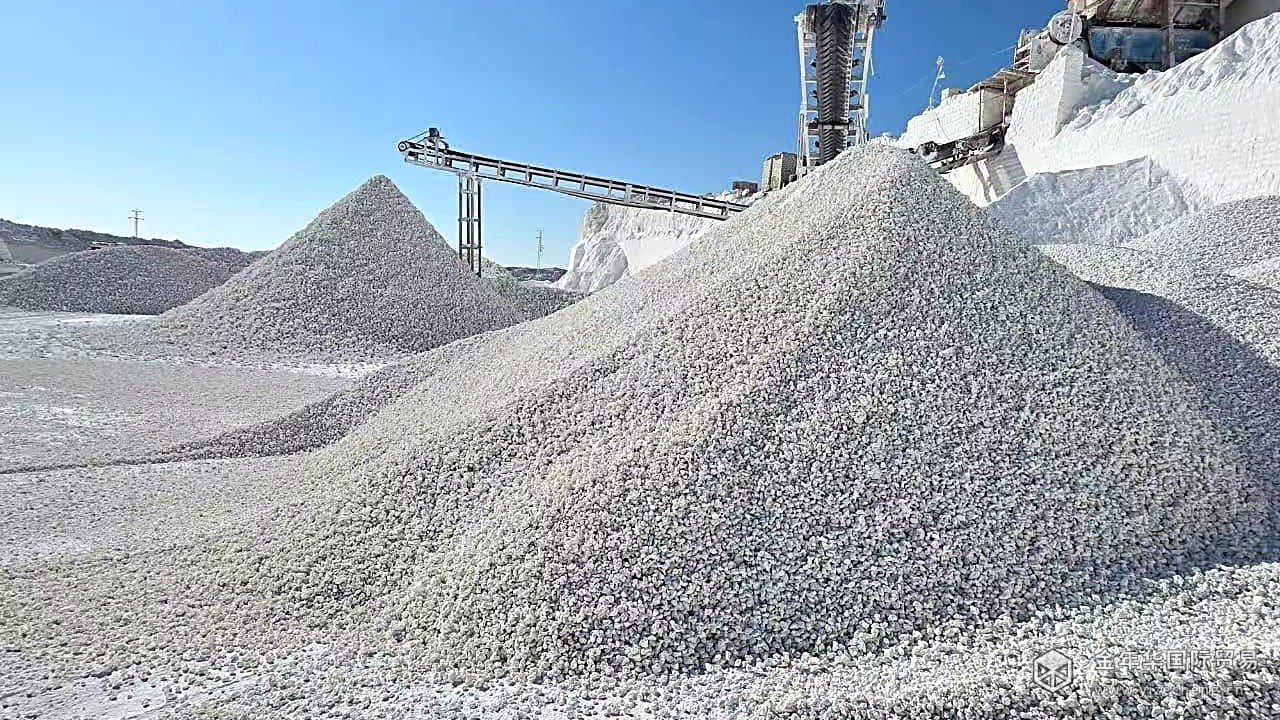
China has more than 6,000 calcium carbonate companies and more than 52 million tonnes of ground calcium carbonate capacity, with utilisation below 70% and the mid-to-low end mired in a price war. Demand for food and pharmaceutical grade and ultra-fine modified calcium is growing 15% to 20% a year, leaving a clear gap. This is the structural contradiction the industry has raised repeatedly in recent years.
The September projects can be read as another expression of that contradiction. At one end, small pure calcium powder projects are in principle no longer approved, and Nanzhao and other places have launched comprehensive consolidation of calcium powder and stone clusters, with companies in the phase-out category required to dismantle equipment by the end of September. At the other end, projects worth billions of yuan are landing in industrial parks.
4. What Buyers Should Watch
Start by getting the price tiers straight. Quotes for nano-grade precipitated calcium and industrial-grade precipitated calcium have differed by as much as three times, and behind that gap sit differences in particle size, activation treatment and application performance. If a buyer compares unit price alone, it is easy to end up comparing products of different specifications, and the conclusion means nothing.
Planned capacity is not actual supply. This batch of projects involves large investment, but going from EIA and energy assessment to completion and full production normally takes two to three years. The Shanglin project’s “annual output value of about RMB 2.5 billion at full capacity” and the Yiyang project’s “annual main business revenue of about RMB 1.5 billion at full capacity” are both projected figures. In the short term, high-end calcium supply remains tight and the room to negotiate is limited.
On supplier screening, it is worth checking first whether EIA and energy assessment procedures are complete: the 50,000-tonne Yiyang project is still in its consultation period and cannot move to the next approval stage until that ends. Next comes commissioned capacity and the actual start-up date; numbers in a plan do not count. Confirm the standard the product follows as well: nano calcium carbonate is governed by Nano Calcium Carbonate (GB/T 19590-2023), so do not apply the standard for ordinary precipitated calcium.
One more easily overlooked point: the Shanglin park groups nano calcium, calcium hydroxide, eco-friendly coatings, plastic masterbatch and sealant together. The owner clearly intends to consume part of the high-end calcium in-house. For a company selling calcium powder alone, an integrated “materials plus downstream” park like this is both a competitor and potentially a customer.
5. FAQ
What is the essential difference between nano calcium carbonate and ordinary precipitated calcium? Both are calcium carbonate chemically; the difference lies in particle size and surface treatment. Nano calcium carbonate has a particle size within 100 nanometres and, after activation and modification, is more compatible with polymers and can deliver reinforcement; ordinary precipitated calcium serves mainly as an extender filler.
Why is high-specific-surface-area calcium hydroxide more expensive than ordinary slaked lime? Because of specific surface area and activity. Flue gas desulphurisation and acidic wastewater treatment demand high reaction rates and utilisation, and ordinary slaked lime falls short on specific surface area, losing out on both dosage and efficiency.
Will ordinary calcium powder get cheaper once this new capacity comes on stream? Unlikely. High-end and ordinary calcium serve different markets, and this round of capacity growth is concentrated in the former; the oversupply in ordinary ground calcium is determined by its own existing capacity.
Which indicators should buyers check when purchasing nano calcium? Particle size and distribution, specific surface area, activation treatment method (type of coupling agent), whiteness, oil absorption value, and whether GB/T 19590-2023 is applied. The weighting of each indicator varies widely by downstream application.
Related Reading
- Same Precipitated Calcium, Three Times the Price: What Separates Nano-Grade at RMB 1,350/t from Industrial-Grade at RMB 480/t
- New Directions in Calcium Carbonate and Mineral Processing: Overcapacity, Tougher Environmental Rules and the Push Upmarket
- Nanzhao Launches Consolidation of Calcium Powder and Stone Clusters: 14 Phase-Out Companies to Dismantle Equipment by End-September
- How to Choose Calcium Carbonate: Ground, Precipitated and Activated Grades Compared by Specification and Application