

Phosphate rock is not a standard industrial commodity. Two parcels both sold as “phosphate rock” will carry different prices because the price moves with P₂O₅ grade, and moisture or silica and magnesia overages trigger penalties or outright rejection of the whole lot. Many buyers who believe they have found a “low price” are only looking at a different quotation basis. Reading the pricing rules and calculating landed cost properly is the core skill in phosphate rock procurement. This article uses the rules from several real tender notices to work the numbers through.
1. Which Quality Specifications Come First
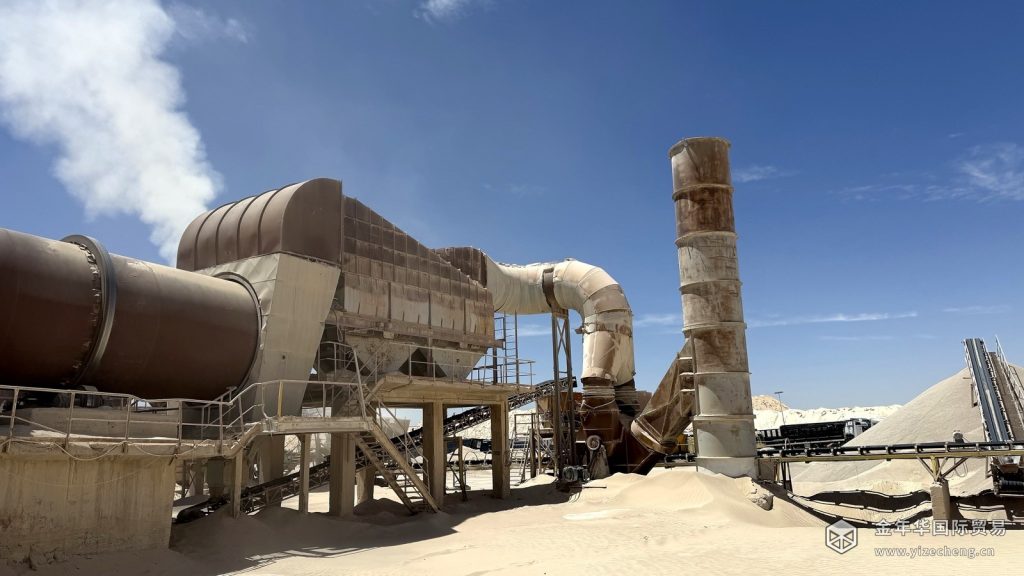
Mainstream phosphate rock procurement anchors pricing on head grade P₂O₅ and then sets hard limits on impurities and particle size. In the July 2026 tender notice from Huidong Jinchuan Phosphorus Chemical, for example, the specification was P₂O₅ ≥ 27%, moisture ≤ 5%, SiO₂ ≤ 20%, MgO ≤ 2%, Fe₂O₃ ≤ 1.5%, Al₂O₃ ≤ 3% and particle size 10–50 mm (Tianfu Sunshine Procurement Service Platform, July 2026). Benchmarks differ widely between mines: Guizhou Kailin uses 28% (Mysteel, April 2026), Jingu Energy uses 32% (Jingu Energy phosphate rock powder inquiry, 2024), and Hubei Yihua tenders by grade band of 20%–25% (Qianxun Tendering, September 2025).
Key point: the first step in any price comparison is converting every supplier’s benchmark grade to the same basis, otherwise you are comparing apples with oranges.
2. Grade Pricing: Progressive Bonuses Above Benchmark, Steeper Penalties Below
Phosphate rock is generally priced on a “benchmark grade plus adjustment” basis, and the deductions get steeper the further grade falls (progressive scale):
- Jinchuan (benchmark 27%): each 0.1% above benchmark adds RMB 3.5–4/t; below benchmark the penalty steps down: a fall of 0.1% within 26.5%–27% costs RMB 6/t, within 26%–26.5% costs RMB 10/t, and below 26% the whole lot is rejected (Tianfu Sunshine Procurement, July 2026).
- Kailin (benchmark 28%): the unit price moves ±RMB 3/t for every 0.1% change in P₂O₅; moisture above 5% is deducted from tonnage (Mysteel, April 2026).
- Jingu (benchmark 32%): a bonus of RMB 28/t for each 1% gain and a penalty of RMB 35/t for each 1% loss; the lower the grade the heavier the penalty, and at ≤ 25% the buyer has the right to confiscate the cargo and settle nothing (Jingu Energy, 2024).
The subtext of these rules is that high grades are scarce and in demand. As the guide Mineral Procurement: A Full-Process Guide from Sourcing to Cost Reduction sets out, nearly 90.8% of China’s phosphate rock is low to medium grade with an average grade of only about 17%–18%, so the premium on high-grade rock has structural support.
3. Penalty and Rejection Limits for Moisture, Impurities and Particle Size
Beyond grade, three types of penalty are most common:
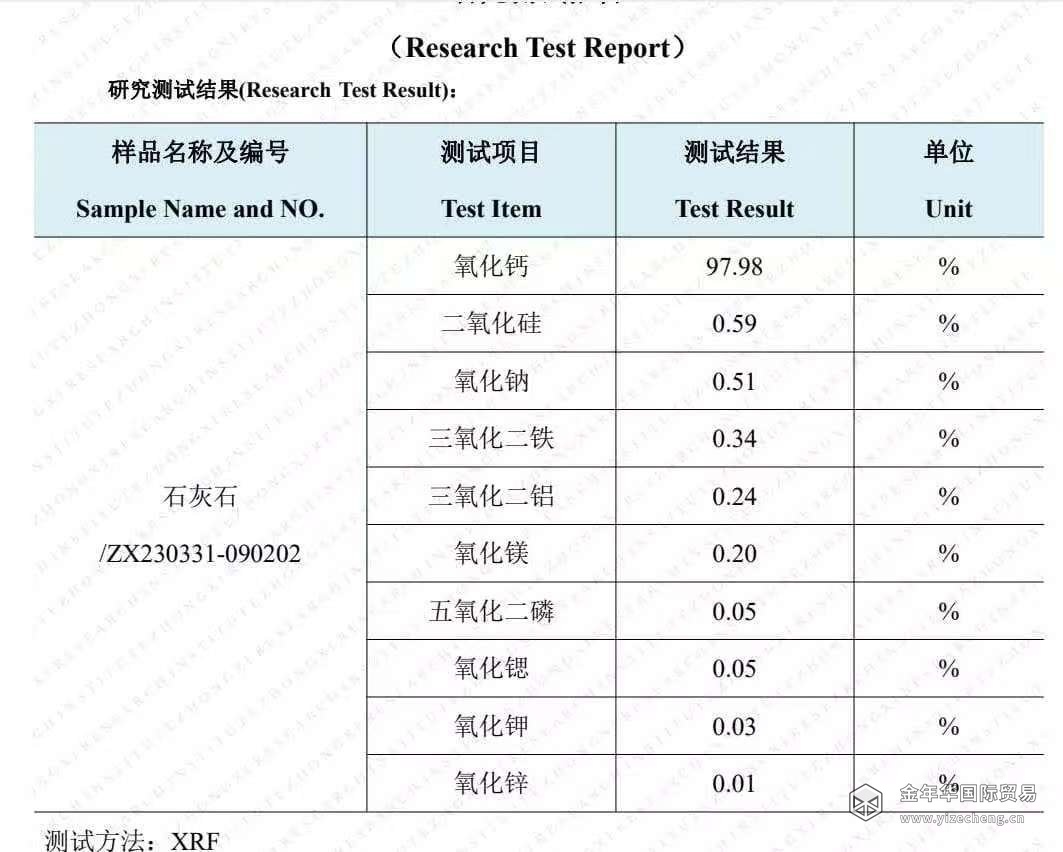
1. Moisture deducted from weight: moisture above the contract ceiling (usually 5%) is deducted from the total tonnage. The deduction hits weight, not unit price, which amounts to an indirect price cut.
2. Rejection for impurities: overages in SiO₂, MgO or Fe₂O₃ usually trigger rejection of the whole lot, as at Jinchuan where SiO₂ > 20% is rejected outright, because they directly affect acid digestion and beneficiation efficiency.
3. Out-of-spec particle size: when the share of material above 50 mm exceeds the threshold, a stepped deduction applies, and in serious cases the lot is rejected.
Avoiding the trap: put the rejection thresholds into the contract, and agree on sampling per truck and weighted-average settlement by lot, so that suppliers cannot pass off inferior material or blend low-grade rock into a consignment.
4. How to Calculate Landed Cost (TCO in Practice)
True landed cost = ore price (on-truck or ex-works, priced by benchmark grade) + freight + taxes + port charges and handling + losses + cost of capital. The key points:
- Tenders often distinguish an ex-works price from a single-invoice delivered price, and the two bases cannot be compared directly; both must be converted to landed cost.
- VAT is usually 9% or 13%, depending on the product and the taxpayer’s status. Input VAT is deductible, but the cost of capital tied up in prepayments is often overlooked.
- Freight moves with distance and fuel prices, and long-distance sourcing has to carry a delivered premium.
As of August 2026 (Longzhong/Mysteel), high grades are running at high levels: Hubei 30% at an on-board barge price of RMB 1,050–1,080/t, Guizhou 30% at RMB 950–980/t, Yunnan 28% at RMB 890/t and Sichuan 30% at RMB 970/t, with a national daily average for 30% grade of about RMB 1,020/t. For example, taking the Hubei 30% barge price at about RMB 1,050/t, adding roughly RMB 80/t for 300 km of road haulage and allowing for handling, port charges and normal losses, landed cost works out at about RMB 1,130–1,170/t, depending on payment terms and loss rate. This is consistent with the same-basis quotes in the 2026 Phosphate Rock Market Outlook: only a delivered-cost basis reveals the real cost.
5. A Worked Procurement Example
Scenario: buying under the Jinchuan rules, with a benchmark P₂O₅ of 27% and a benchmark price set at X RMB/t; the delivered assay shows P₂O₅ 28.5%, moisture 4% and SiO₂ 18%.
- Grade bonus: 1.5% above benchmark (= 15 increments of 0.1%), at RMB 4/t each, raises the settlement price by RMB 60/t;
- Moisture at 4% is below 5%, so no deduction; SiO₂ at 18% is below 20%, so no deduction;
- The actual settlement price is roughly the benchmark price plus RMB 60/t.
If another supplier quotes RMB 30/t lower but on a benchmark of only 26.8%, which falls inside the penalty band, the delivered result is in fact more expensive. That is where the pricing rules decide who wins.
FAQ
Q1: Is a higher phosphate rock grade always better?
A higher grade saves freight and lifts output, but the unit price is higher too, so judge it on total cost of ownership. High grades are also scarce, so match the grade to your own process rather than chasing the highest number.
Q2: Why watch the rejection threshold so closely?
It is the last gate against a supplier passing off inferior material. Without an agreed threshold, a blended low-grade consignment fails as a whole and the buyer carries the entire loss.
Q3: Which is better value, an ex-works price or a delivered price?
There is no absolute answer. The point is to convert both to landed cost before comparing. A delivered price looks higher but includes freight and transfers risk, so it is not necessarily the worse deal.
Conclusion
Competitiveness in phosphate rock procurement comes down to reading the pricing clauses and calculating landed cost properly. Put the benchmark grade, the bonus and penalty coefficients, moisture weight deductions and impurity rejection thresholds into the contract, and you avoid the hidden losses created by differing quotation bases and secure genuinely cheaper rock in a tight, high-priced market.