Phosphate Ore Uses: Which Industries Buy It and What For
Four end uses, four specifications. Why fertiliser buyers chase P2O5 while battery buyers chase magnetic particles, and how to match a parcel to the plant that will run it.
Tell us the grade, quantity and destination port — we reply within one business day. Prefer email? yzc@hnjnhg.cn
Home / Procurement Guide
We explain the concepts that trip people up in cross-border mineral procurement, so you avoid detours and keep costs under control.

Four end uses, four specifications. Why fertiliser buyers chase P2O5 while battery buyers chase magnetic particles, and how to match a parcel to the plant that will run it.

There is no single market price for phosphate rock. Two cargoes of the same tonnage can trade at very different numbers because grade, origin, specification and Incoterm all differ.

Same ore body, two products. This note explains how beneficiation raises P2O5 and cuts iron, aluminium and magnesium, and what to fix in a purchase order for each form.

Calcium carbonate is the compound CaCO3. Ground calcium carbonate is milled from limestone, calcite or marble; precipitated calcium carbonate is made by calcination and carbonation. Same chemistry, different product families.

A practical guide to classifying rock phosphate under HS 2510.10 or 2510.20, the COA and origin documents buyers should require before loading, and the specification parameters worth fixing in the contract.

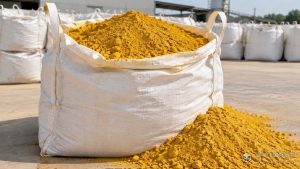
Alpha-FeOOH, Pigment Yellow 42: how to compare iron oxide yellow grades, which certificate of analysis figures to verify, and where each grade is used.

Two reports on the same lot often disagree, and the cause is usually sampling. The article covers increments, sampling points, splitting and retained samples under GB/T 2007.

A bill of lading says 5,000 tonnes and the weighbridge reads 4,950. This article unpacks the three weight figures, the 5‰ accuracy limit and moisture conversion.

A tonne of calcium carbonate behaves differently in plastics, rubber and coatings. Mesh, whiteness and oil absorption drive the choice, and the traps are avoidable.

The ban on exporting high-grade phosphate rock makes buying the right ore harder, not impossible. How to widen source countries, match grades and negotiate landed cost.

FOB, CFR and CIF differ on who books the vessel, pays freight and buys insurance, but risk transfers at the same moment. Two-level cost formulas and eight hidden cost items.

From raw ore to phosphoric acid to fine phosphates, value rises step by step. How importers should pick their place in the chain.
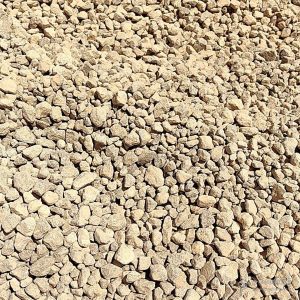
We source industrial minerals directly from mines in Egypt and Jordan — mainly phosphate rock, calcium carbonate and iron oxide yellow — and supply them on steady schedules to factories and traders.
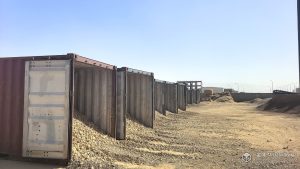
The usual flow runs: sourcing at origin → third-party inspection → cross-border shipping → clearance at the discharge port → onward delivery. We handle the whole chain.
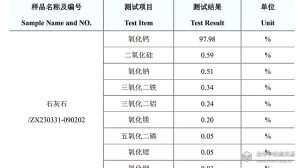
Our standard ranges are listed on the product pages, and every shipment carries a Certificate of Analysis from an independent third party covering grade, particle size and impurities. Tell us the grade and volume you need and we will confirm what we can load for your window.
Every shipment is assayed for composition and quality by an independent third party, with the report attached to confirm the agreed specification.
Minimum order quantity depends on the shipment mode: from 2,000 t for a container shipment, from 50,000 t for a bulk vessel. Lead time is approx. 10 days for a container shipment and approx. 15 days for a 50,000 t bulk cargo. Contact us via the details on this page and we will quote against your specification and tonnage.
Articles in this knowledge base cluster into a few themes. If you are new to importing minerals, start with fundamentals and process. If you already buy and need to solve a specific problem, go to selection and cost. If you handle documentation and disputes regularly, see the documentation and risk-control section.
If your time is limited, read in this order — each step builds on the previous one, and skipping tends to miss key premises.
Applications, indicator systems and processing differ completely across minerals. First separate the phosphorus source (phosphate), the filler (calcium carbonate) and the colorant (iron oxide yellow), then understand each set of indicators — CaO/MgO and heavy metals for phosphate, whiteness and particle distribution for calcium carbonate, tinting strength and dispersibility for iron oxide yellow. Without this step, price comparison is meaningless.
The real cost of imported minerals combines the ore price, freight and insurance, duty and VAT, terminal charges, inland transport and FX. Looking at the ore price alone understates it. Normalising every quote to a delivered basis before comparing makes the conclusion reliable — and often reveals that a cheaper quote is not actually cheaper.
Sampling representativeness, analytical method, umpire laboratory, certificate-of-origin eligibility and loading windows should all be settled before signing rather than negotiated after a problem appears. Agree the arrival re-test mechanism and dispute path in advance. Most disputes are hard not because the amount is large, but because nothing was agreed upfront.