

Pick the wrong mineral supplier and an entire production line can stop, a batch can be scrapped, or a compliance problem can surface. Supplier evaluation for minerals has to move past “lowest price wins” and build a scorecard across five dimensions — qualifications and reputation, quality consistency, delivery capability, compliance and risk control — then use digital tools to shift buying from experience-based to data-based.
1. Five Dimensions of Supplier Evaluation (Scorecard)
| Dimension | What to Look At | Suggested Weight |
|---|---|---|
| Qualifications and reputation | Years in business, mine ownership, past cases, customer references | 20% |
| Quality consistency | Lot pass rate, consistency of assay reports | 25% |
| Delivery capability | Capacity headroom, on-time arrival rate, emergency replenishment | 20% |
| Compliance and environment | Mining and discharge permits, green mine certification | 20% |
| Cost and flexibility | Price competitiveness, flexibility of terms | 15% |
Comparing suppliers side by side on one scorecard keeps personal connections and the lure of a low price from distorting the decision. Practice at leading steel producers bears this out: a supplier evaluation system, competitive tendering, and sensible purchase lot sizes and cycles are the key to lower cost and stable supply (Shaanxi Steel Hancheng procurement optimisation case, 2024).
2. Mineral Quality Inspection: The Step Procurement Cannot Skip
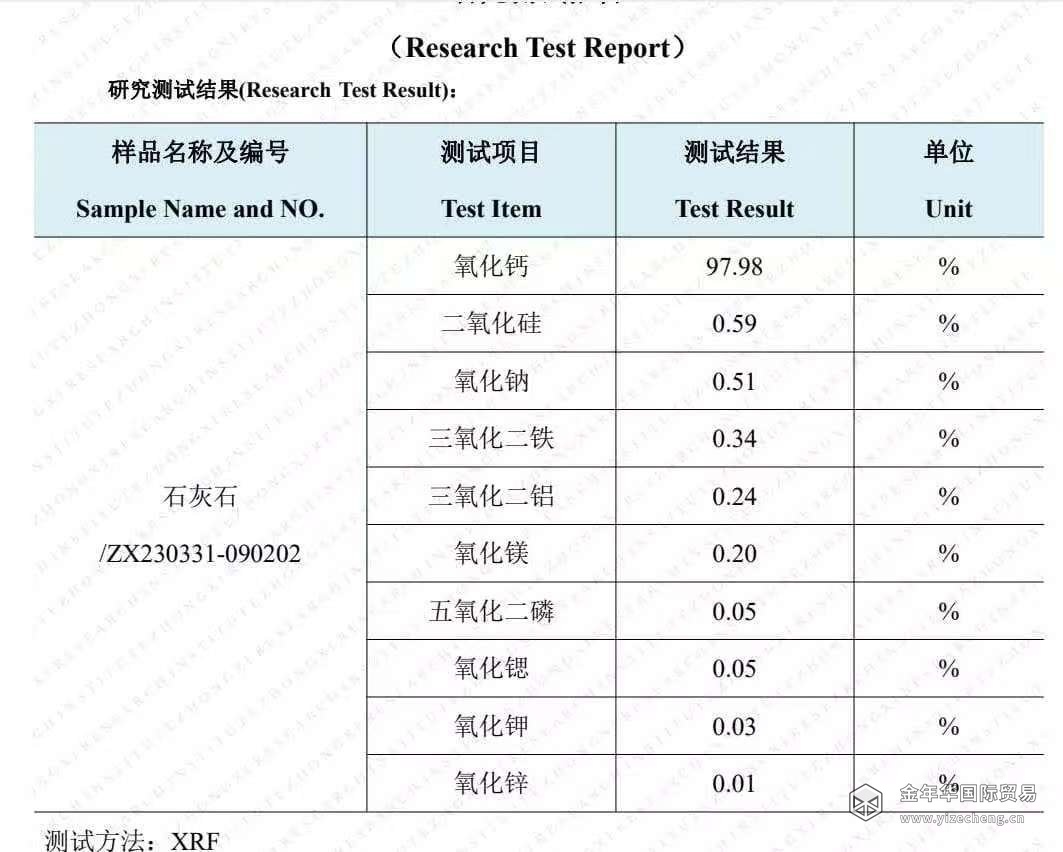
Seeing a sample is not the same as taking delivery — transport and lot-to-lot variation both introduce deviations. The accepted industry best practice is to always require a laboratory test report covering four items: purity and grade, moisture percentage, chemical composition and particle size distribution (minerals.com.pk, Jan 2026).
The safer route is to run the sample first: before confirming a bulk order, obtain a physical sample and trial it under real production conditions to see how it processes and stores, then decide whether to scale up.
3. Procurement Risk Control: Four Common Risks and Countermeasures
- Quality risk: unstable lots cause swings on the production line. Countermeasure: retain lot samples + re-inspect on arrival + clear quality dispute clauses.
- Supply disruption risk: environmental or safety inspections shut mines down. In August 2026, for example, Sichuan saw widespread shutdowns under an environmental inspection and phosphate rock supply tightened (Longzhong Information, 5 Aug 2026). Countermeasure: multiple sources + safety stock.
- Price volatility risk: phosphate rock consolidating at high levels and calcium carbonate diverging, for instance. Countermeasure: long-term agreements + price adjustment clauses.
- Compliance and contract risk: the Ecological Environment Code takes effect on 15 August 2026 (only one day after publication), replacing ten separate environmental laws and imposing rigid whole-lifecycle constraints on the mining, processing and transport of ore; the Supreme People’s Court has issued matching rules on temporal effect to bridge the old and new law (the Supreme People’s Court, 5 Aug 2026; Hithink RoyalFlush, 11 Aug 2026). Countermeasure: verify supplier licences, write environmental compliance into the entry threshold, and give preference to suppliers with green mine certification.
4. Digital Procurement: From Excel to a System
Once suppliers and categories multiply, managing on spreadsheets and group chats inevitably breaks down. Digitalise in three steps:
- Supplier database: consolidate qualifications, scores and lot records into a searchable supplier file.
- E-tendering and price enquiries: keep a record of every comparison, invite competition, make the process traceable.
- Arrival inspection and price alerts: capture inspection data, on-time arrival rates and market prices automatically, and flag exceptions.
Policy is forcing the upgrade as well: nationwide, more than 5,100 green mines at provincial level or above have been built, accounting for 40.8% of licensed producing mines; in 2025 the share of coal capacity using intelligent mining passed 50% for the first time (China National Coal Association, Jan 2026). Upstream is going digital and intelligent — procurement management should keep pace.
FAQ
Q1: What should you watch when working with a new supplier for the first time?
Start with a small trial order + sample confirmation + licence verification. Run one full cycle before scaling up — far safer than a large first order.
Q2: What if there are too many suppliers to manage?
Grade them with the scorecard: strategic (long-term agreement + regular reviews), regular (competitive bidding), and phase-out (remediation within a deadline or exit). Put your effort into the first two.
Q3: Does digital procurement require a system?
Not necessarily. Structured spreadsheets and a common template can solve 80% of the chaos; add an SRM or ERP module once volumes grow.
Conclusion
Choosing a mineral supplier is a risk investment decision. The five-dimension scorecard settles whom to pick, inspection and risk control settle nothing going wrong, and digitalisation settles keeping it under control. Get all three in place and procurement turns from a cost centre into a profit moat.