

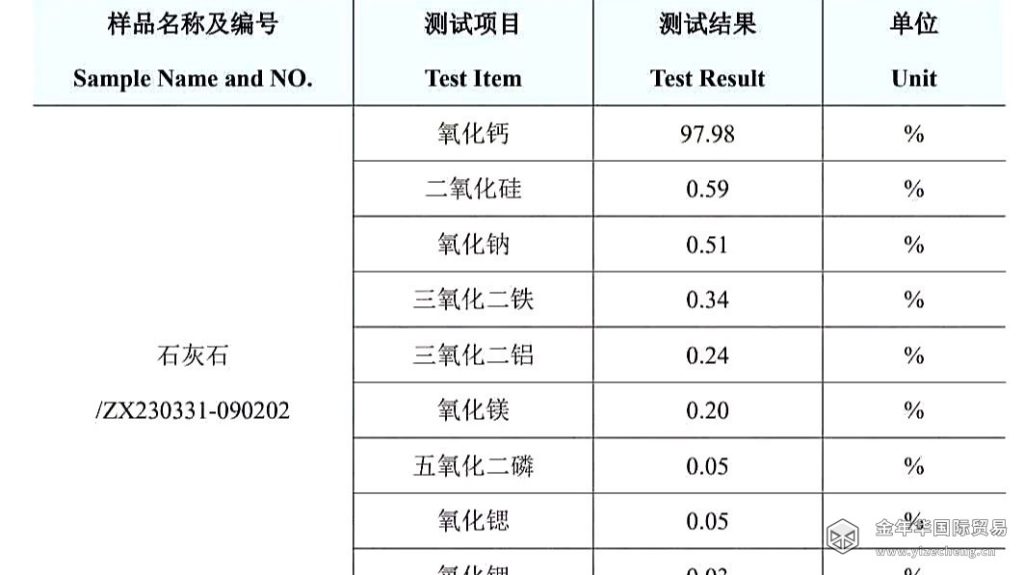
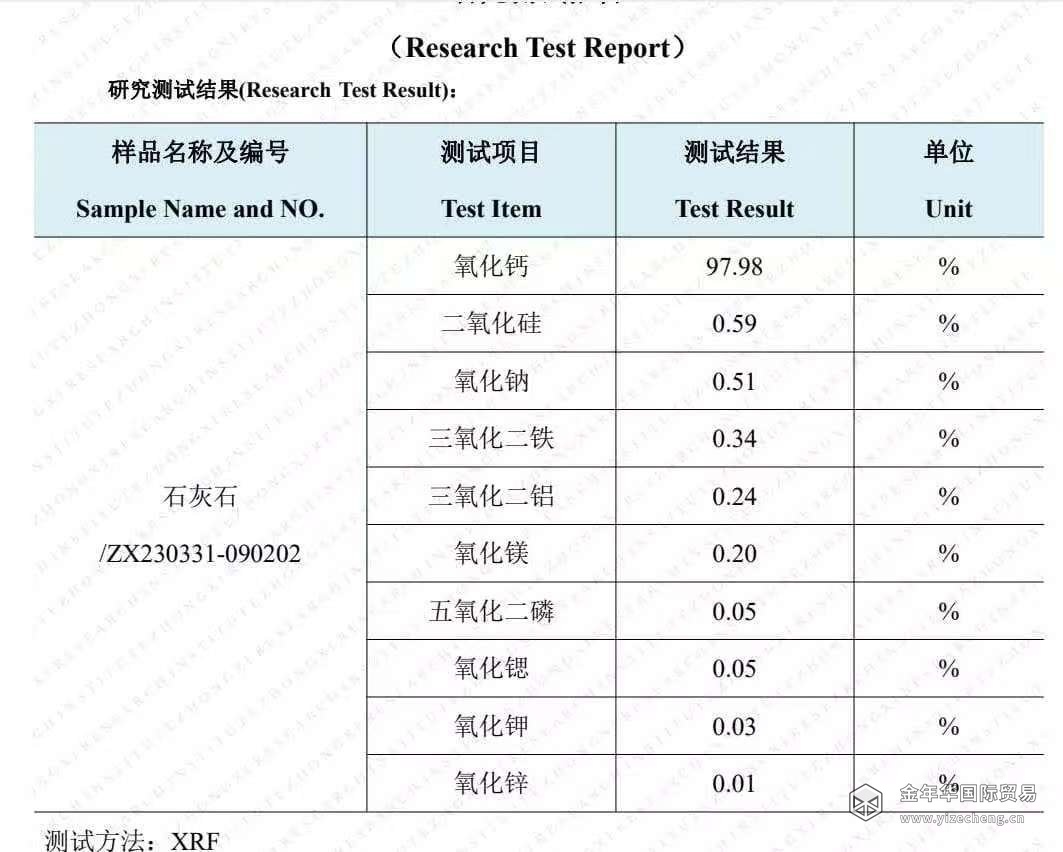
On the same lot of phosphate rock, the seller’s report shows P₂O₅ 28.5% while the buyer’s inbound re-test gives only 27.2%. Neither laboratory got it wrong — the gap comes from the sample: whether it was taken from the same lot, and whether it captured a representative part of it. In mineral trading, sampling and sample preparation sit at the very front of quality control and are also the step most often skipped.
1. When Two Reports Disagree, Suspect Sampling First
Laboratory error can be quantified. With duplicate samples and spike recovery, a lab can usually hold deviation within an acceptable range. Sampling error has no upper limit: if the sample in hand does not represent the whole lot, even the most precise assay only calculates a skewed number more precisely.
The familiar scene: a 30,000-tonne cargo of phosphate rock is discharged to the stockyard, and a technician scoops a few shovelfuls off the top of the pile into a bag. Stockpiles segregate by particle size during discharge — fines stay in the core, coarse lumps roll to the toe. Sampling from the top is naturally biased toward one size fraction, and a gap of more than one percentage point from the true average of the lot is not uncommon.
So when reports conflict, do not rush to question the other side’s laboratory. Ask instead: who took the sample, where, how much, and how was it split. If you want to understand the indicators on an assay report first, see How to Read Grade and Assay Reports.
2. Sampling: Increment Count and Sampling Points Decide the Outcome
GB/T 2007.1-1987, General Rules for Sampling and Sample Preparation of Bulk Minerals — Manual Sampling Methods, is the basic general rule for sampling bulk minerals in China. Issued in 1987 and effective from 1988, it adopts ISO 1422:1986 on a non-equivalent basis and remains in force. Its scope explicitly covers fluorspar, bauxite, talc, manganese ore, iron ore and chromium ore, and may be referenced for barite, magnesia, feldspar, clay, gypsum, limestone, dolomite and magnesite. In practice, sampling for phosphate rock and calcium carbonate products is usually designed along the same lines.
The general rule requires three quantities to be fixed first, rather than scooping a few shovelfuls into a bag:
- Number of increments: determined by lot size and quality variation. The larger the lot and the greater the variation, the more increments are needed. The standard sets out the corresponding test and calculation approach.
- Distribution of sampling points: must cover the spatial distribution of the whole lot. Stockyard sampling has to cover the top, the middle and the toe of the pile; hold sampling follows the hold layout; belt sampling takes cuts at uniform time intervals.
- Increment mass: the coarser the particle size, the heavier each increment. The standard sets a minimum mass for each particle size.
Beyond manual sampling there is mechanical sampling. Automatic samplers on a belt conveyor reduce human bias — the metallurgical industry has a dedicated standard, YB/T 4608-2017, Automatic Sampling Method for Bulk Materials Transported by Truck in Metallurgy — but only on the premise that the sampler itself has been calibrated.
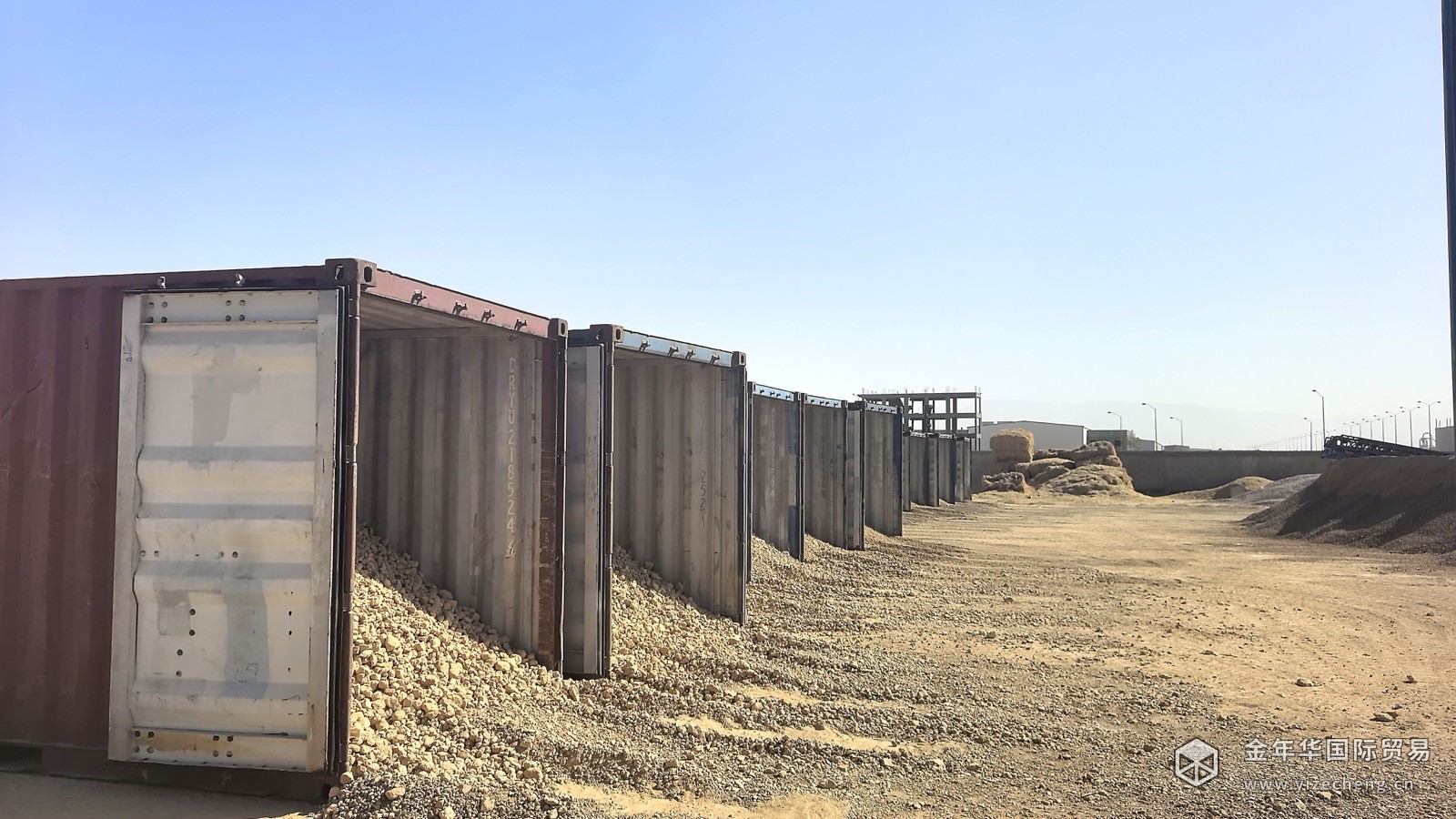
Bulk minerals shipped in containers call for a different approach, with dedicated industry standards such as SN/T 3519-2013, Sampling Method for Bulk Ore in Containers. If the cargo arrives containerised, ask the supplier directly which standard was used for sampling.
3. Sample Preparation: Crushing, Blending and Splitting — No Step Can Be Skipped
Obtaining the gross sample is not the end of it. A sample of several kilograms, or even tens of kilograms, cannot be sent to the laboratory whole; it must be reduced by sample preparation to an analytical sample of a few tens of grams, and still represent the original sample.
GB/T 2007.2-1987, General Rules for Sampling and Sample Preparation of Bulk Minerals — Manual Sample Preparation Methods, sets out the manual preparation process and retention specifications, and states the final requirements for each type of sample:
- Moisture sample: retain 5 kg at a particle size of -22.4 mm; retain 2.5 kg at -10 mm
- Chemical analysis sample: maximum particle size 180 μm (80 mesh), retain 250 g
- Particle size sample: prepared after the sample is air-dried naturally
The process normally runs crush, blend, split, then crush, blend and split again, stepping down particle size and sample mass. The common splitting methods are quartering (cone-and-quarter) or a riffle splitter. One point is easy to get wrong: splitting must follow thorough blending of the sample, otherwise the splitting itself becomes a source of error.
Crushing and grinding must also use enclosed equipment to prevent dust loss and cross-contamination. Powder left in the equipment from the previous sample is enough to distort the trace-component results of the next one.
4. Keep Moisture and Particle Size Samples Separate
These two items must not be handled together with the chemical analysis sample. Moisture is determined under GB/T 2007.6-1987, General Rules for Sampling and Sample Preparation of Bulk Minerals — Method for Determination of Moisture (Heat Drying Method). A sample loses moisture continuously between sampling and weighing, so weighing has to be completed in the shortest possible time. Particle size is determined by the manual sieving method of GB/T 2007.7-1987.
Moisture affects settlement directly. Most minerals are priced on a dry basis, and each extra percentage point of moisture knocks a considerable amount off the payment. That also means the moisture sample must be sealed separately and tested promptly.
5. Sample Retention and Third-Party Re-Testing
After sampling, the sample must be sealed and kept to the standard — generally one analytical sample and one retained sample, each signed and confirmed by both parties or by a third party. Retention matters because it gives you evidence when a dispute arises: if the buyer’s inbound re-test deviates from the seller’s report beyond the agreed range, the retained sample can be sent for third-party arbitration testing.
A few practical suggestions: have the buyer present at sampling, or appoint a third-party inspection body to carry it out, so that sampling is never unilateral; match the retention period of the retained sample to the objection period agreed in the contract, generally no less than 30 days after delivery; and designate the third-party re-testing body in the contract in advance rather than negotiating after a dispute breaks out.
6. How to Draft the Sampling and Inspection Clause
Writing these points into the contract removes most of the later wrangling:
- Sampling basis: state which standard governs sampling and sample preparation — the GB/T 2007 series domestically, or loading-port practice or ISO 3082 for imports
- Who samples: unilateral sampling, joint sampling by both parties, or a third-party body
- Place and time of inspection: inspection at the loading port or re-testing at the destination port, and which one prevails
- Dispute handling: how large a deviation triggers an objection, within what period it must be raised, and how the retained sample is submitted for testing
- Cost allocation: whose permitted error range the re-test result falls within decides who pays
FAQ
Q1: If the supplier provides a third-party test report, do I still need to sample myself?
Keep up spot checks. A third-party report proves the quality of the sample submitted, not of the whole lot, unless it explicitly records how, when and by whom the sample was taken. Inbound re-testing is the buyer’s most basic self-protection.
Q2: Does a larger sample always mean a more accurate one?
No. Sample mass addresses segregation caused by particle size differences, but a sample whose sampling points are poorly distributed does not represent the lot no matter how large it is. Increment count and distribution matter more than the mass of a single sample.
Q3: Why must the moisture sample be taken separately and tested quickly?
Because a sample exposed to air loses moisture continuously; left standing, it tests low. Settlement runs on a dry basis, so the moisture figure feeds straight into the payment. The shorter the interval between sampling and weighing, the better.

Conclusion
Sampling and sample preparation look minor, but they decide the credibility of every number that follows. Rather than arguing once the reports conflict, write the sampling basis, the sampling party and the objection mechanism into the contract from the start.
Related Reading
What to Check in a Test Report When Buying Mineral Raw Materials
Phosphate Rock Procurement Guide: Grade Pricing, Quality Penalties and Landed Cost Calculation