

When an assay report lands on your desk, what you look at first and what you leave until later decides whether you can read risk out of that sheet of paper. Core indicators differ between minerals, and the same indicator on a different basis cannot be compared directly. What follows breaks the reading process into four layers.
1. First Confirm Which Lot the Report Covers
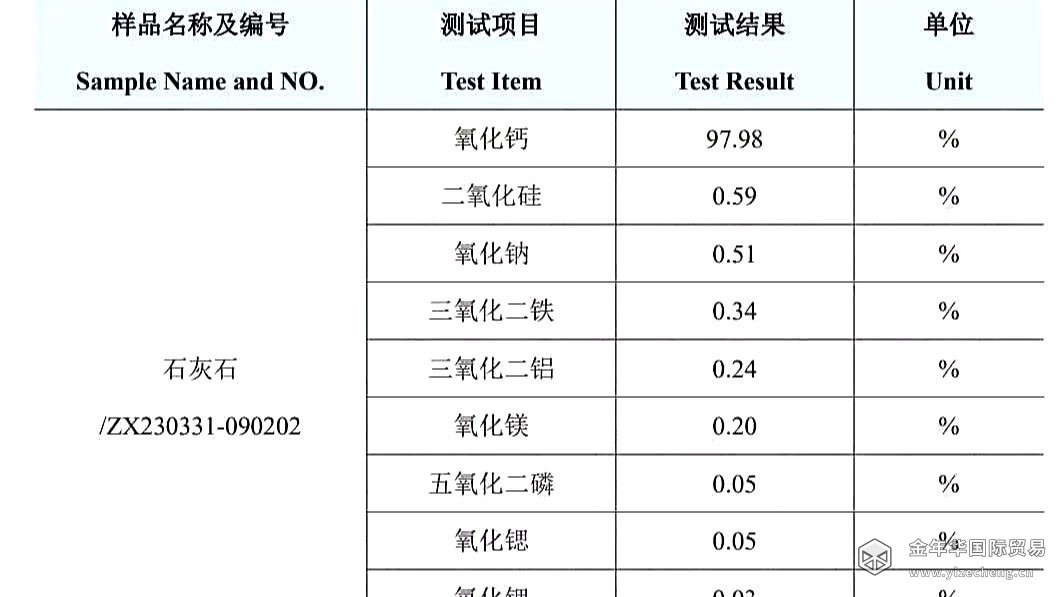
A report’s identity information comprises the product name, lot number, sampling date, sampling location and list of test items. Leave out any one and the usefulness of the report is compromised. The most common problem in practice is using the report for one lot to accept a different consignment, or a sampling date that sits so far before the shipment date that the cargo has been transhipped and stockpiled in between.
The checking logic here follows the same route as the overall verification process; What to Check in an Assay Report When Buying Mineral Raw Materials sets out the points on lot and sampling information more systematically.
2. What to Look at for Each Mineral
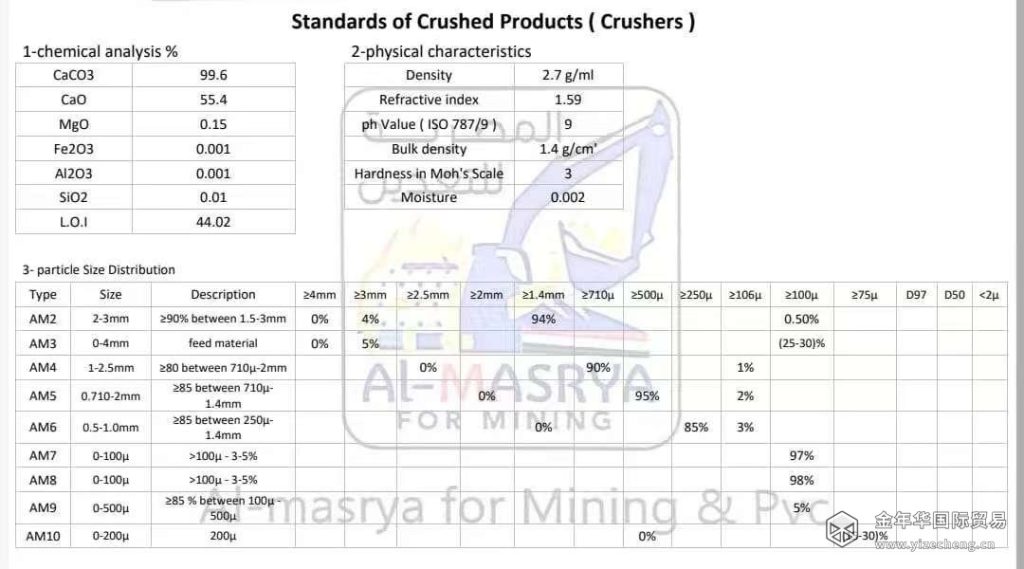
The indicator columns on an assay report mean different things for different minerals. For phosphate rock the core figure is P₂O₅ content, read together with impurities such as Fe₂O₃, Al₂O₃ and MgO. For calcium carbonate it is CaCO₃ content, whiteness and heavy metals, with food and pharmaceutical grades carrying limits on specific impurities. For pyrite it is sulphur content, alongside arsenic, fluorine, lead and zinc. For iron oxide pigments it is Fe₂O₃ content and hue.
Indicators are not independent of one another. Taking phosphate rock, high MgO pushes up acid consumption, while high Fe₂O₃ and Al₂O₃ affect the filtration performance of phosphoric acid. So a report cannot be read by watching the main content figure alone; the associated impurity indicators determine the real cost of downstream processing. The specific grade bands are covered in More Than One Kind of Phosphate Rock: Rock Phosphate, Sedimentary Phosphorite and Grade Classification.

3. Dry Basis and Wet Basis: The Easiest Thing to Get Wrong
This is the item most often overlooked in price comparison and the one with the most direct effect. Most minerals are priced on a dry basis — that is, after deducting moisture. If the grade on a report is marked “dry basis”, moisture has already been excluded. If it is marked “wet basis”, or the basis is not stated at all, taking it straight into a price comparison will introduce a bias.
Moisture has a double effect. On one hand it changes the priced weight: each extra percentage point of moisture reduces the dry weight by a corresponding proportion, and the payment has to be adjusted. On the other, it affects the grade reading: the same lot converted to a different basis will show a different P₂O₅ or CaCO₃ percentage. When two reports show different numbers, first confirm that the basis is the same, then judge which is higher.
How moisture is determined also matters. A sample loses water continuously between sampling and weighing, so the weighing has to be completed in the shortest possible time or the data is distorted. Sampling standards set this out explicitly.
4. Particle Size Affects the Process, Not Just Appearance
Particle size on a report is usually presented as sieve results, and what matters is the distribution across bands rather than a single mesh figure. Two products both labelled 325 mesh can differ in D97 and fines content, and will behave differently in terms of opacity in coatings or dispersion in plastics.
For downstream processing, the cost of unsuitable particle size is often higher than the cost of an off-specification grade. Oversize material increases the load on the grinding stage; undersize material can cause dusting and handling difficulties. Particle size indicators should therefore be read together with your own process conditions, rather than simply pursuing the finest possible product.
5. Arranging Re-Testing and Arbitration
Where the seller’s report and the buyer’s inbound re-test disagree, the handling mechanism should be agreed in the contract rather than negotiated when the problem appears. Three elements are needed: which end’s result prevails, what deviation range is permitted, and which body arbitrates once the range is exceeded.
The retained sample is the fulcrum of the whole mechanism. After sampling, one analytical sample and one retained sample are sealed to the standard and signed off by both parties or a third party, with the retention period matching the objection period in the contract. Without a retained sample there is no traceable basis for either side when a dispute arises. The standard practice for sampling and sample preparation is in Mineral Sampling and Preparation: Increments, Splitting and Representativeness.
Conclusion
It is worth fixing the order in which you read an assay report: confirm the identity information first, then read the core indicator and associated impurities for that mineral, then check the basis, and finally look at particle size distribution. Working through those four steps before drawing a conclusion avoids most misjudgements. And if two reports disagree, suspect the sampling first, the basis second, and the laboratory last.
Related Reading
What to Check in an Assay Report When Buying Mineral Raw Materials
Mineral Sampling and Preparation: Increments, Splitting and Representativeness