

Mineral prices move on supply and demand, policy, freight and foreign exchange. Buyers cannot forecast the direction, but they can change the way they are exposed to the movement. Holding procurement costs steady comes down to controlling the timing structure and the clause structure of purchasing; guessing the direction of prices is of limited use.
1. First Work Out Why the Price Is Moving
The sources of mineral price volatility can be roughly divided into three layers. The first is supply and demand fundamentals, covering mine operating rates, downstream operating rates and inventory levels. The second is policy and events, such as mining controls, changes to export policy or disruption on a shipping route. The third is cost pass-through, where a change in upstream feedstock prices is squeezed down the chain.
These three layers last very different lengths of time. Event-driven shocks usually ease within weeks; policy changes run for months to years; cost pass-through changes the pricing centre of the whole chain. Procurement strategy has to match: event-driven volatility is worth waiting out, policy change is worth locking in ahead of, and cost pass-through means getting the clauses settled as quickly as possible.
One way to tell them apart is to look at the breadth of the price movement. If only a few minerals are moving, it is probably a localised event; if the whole chain moves in the same direction, it usually points to cost or policy. The 2026 phosphate chemical cost pass-through is an example: a change in sulphur prices travelled down the chain to phosphates and calcium products, and Sulphur Tight, Phosphoric Acid Up RMB 1,000 in a Month: How Cost Reaches the Buyer breaks the chain down in full.
2. Long-Term Volumes and Staged Price Locks
What a long-term agreement buys is mainly a narrowing of the price range, not necessarily the lowest unit price. During a period of high-level consolidation, using a long-term agreement to cover base volume and the spot market to top up increments is far steadier than running everything on spot. The proportion depends on your own inventory turnover capacity and supply security requirements.
Staged price locks apply the same idea across time. Split the annual requirement into several tranches and execute at different points, rather than concentrating purchases at a single moment and putting all the risk on one day’s price. Watch the validity window of each lock: for products where costs move quickly, suppliers are offering fewer long-dated quotations.
3. Clause Structure Matters More Than the Headline Price
Several types of clause affect the final cost by as much as the unit price does:
- Price adjustment clause: agreeing to renegotiate when feedstock or freight moves beyond a set range, so that neither side is left carrying the loss alone.
- Foreign exchange clause: agreeing an exchange rate band and how any excess is shared. Transactions quoted in US dollars and settled in renminbi need this especially.
- Freight clause: making clear whether the basis is FOB, CFR or CIF, and who carries freight volatility.
- Pricing basis and moisture basis: wet tonnes or dry tonnes, and which end’s moisture figure applies — these decide the settlement amount directly.
These clauses can be drafted from an existing template; Phosphate Rock and Calcium Carbonate Contract and RFQ Templates contains standard clause structures for price adjustment, loss, acceptance and the objection period.
4. Inventory and Arrival Scheduling
Safety stock is the physical buffer against volatility. Where to set the line depends on three variables: the length of a single replenishment cycle, the stability of consumption, and the cost of a production stoppage. Processes where a stoppage is expensive need a correspondingly higher line.
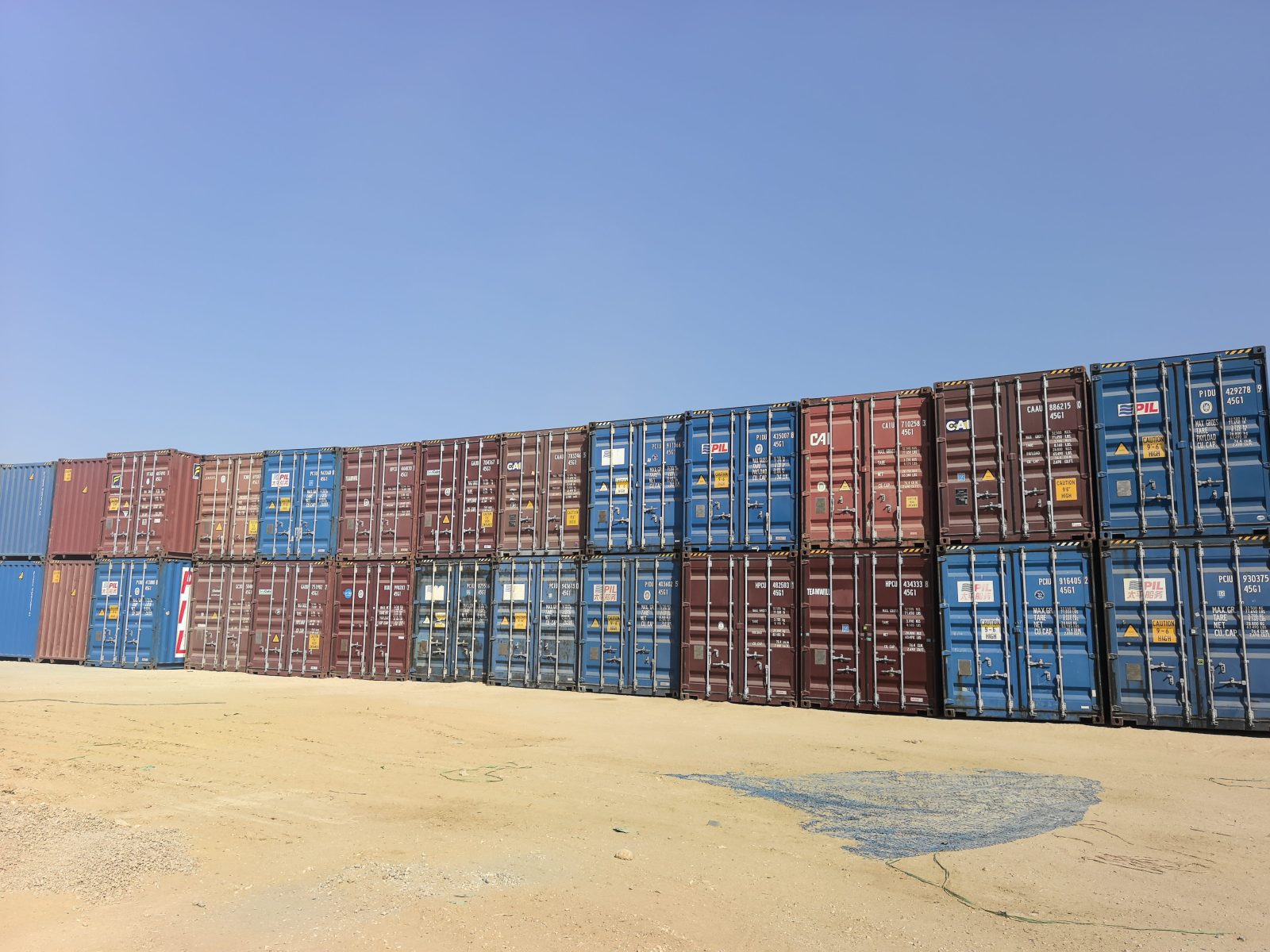
Arrival scheduling needs staggering too. Concentrated arrivals tie up both capital and storage at once, and demurrage and storage charges at a congested port accrue daily; arrivals that are too sparse push safety stock up. Aligning the arrival plan with your own production rhythm and port capability is the part of cost management most easily overlooked.
That logic matters especially when the market is in tight balance. The judgement offered in Phosphate Rock Market Outlook 2026: Tight Supply, High Prices and Procurement Response is that rather than gaming the short-term price, it is better to make the supply chain steady through long-term agreements, multiple sources and dynamic inventory.
5. What Multi-Sourcing Actually Reduces
Multiple sourcing mainly reduces the risk of supply interruption, not price risk. When a source country changes policy or logistics are disrupted, having one more option means production does not stop. The cost is higher administrative overhead, and a smaller volume per supplier can mean losing negotiating leverage.
A reasonable approach is to tier sources into a primary and a backup. The primary carries most of the volume under a long-term agreement; the backup keeps a small volume running so that process compatibility is proven and it can be scaled up at any time. That preserves both negotiating power and switching flexibility. When the Egypt and Jordan supply relationship shifted in 2026, this structure showed its value.
Conclusion
Holding procurement costs steady comes down to three things: reading the nature of the price movement correctly, writing the clause structure clearly, and spreading out inventory and arrival scheduling. Price volatility cannot be avoided, but you can decide how, and for how long, you are exposed to it.
Related Reading
Phosphate Rock Market Outlook 2026: Tight Supply, High Prices and Procurement Response
Sulphur Tight, Phosphoric Acid Up RMB 1,000 in a Month: How Cost Reaches the Buyer
Phosphate Rock and Calcium Carbonate Contract and RFQ Templates