More Than One Kind of Phosphate Rock: Sedimentary, Igneous and Grade Classification Explained
Phosphate rock is classified as sedimentary or igneous. The key is P₂O₅ grade and impurities, and cargoes should be compared on a full landed basis.
Tell us the grade, quantity and destination port — we reply within one business day. Prefer email? yzc@hnjnhg.cn
Home / Procurement Guide
We explain the concepts that trip people up in cross-border mineral procurement, so you avoid detours and keep costs under control.

Phosphate rock is classified as sedimentary or igneous. The key is P₂O₅ grade and impurities, and cargoes should be compared on a full landed basis.

Price moves with P₂O₅ grade, and moisture or impurity overages bring penalties or outright rejection. Real tender rules show how grade pricing and landed cost work.

GCC, PCC and activated calcium carbonate differ sharply in process, particle size, whiteness and oil absorption. A comparison table plus a selection checklist by process.

A core clause checklist for mineral purchase contracts, the special clauses phosphate rock and calcium carbonate need, and a ready-to-use RFQ field template.

How do you avoid low-price traps when buying minerals? Using phosphate rock and calcium carbonate as examples, this guide breaks down the strategic sourcing process, six cost-reduction strategies, a supplier assessment checklist and quality-control essentials.

A wrong mineral supplier can stop a production line. A five-dimension scorecard, four risk controls and digital tools keep supply steady.

1) Nail down grade and particle size first; 2) agree the Incoterms; 3) go to the source rather than layers of traders; 4) insist on third-party assay before shipment; 5) match the shipping method to your…

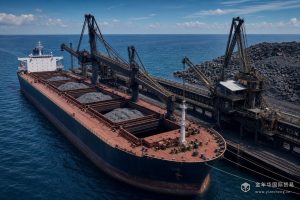
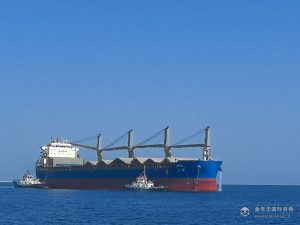
Large volumes of low-value ore such as run-of-mine phosphate rock usually move by bulk carrier at a lower unit freight; small, high-value or moisture-sensitive grades such as fine calcium carbonate suit containers. Port handling capability and…

Core documents include the contract, invoice, packing list, bill of lading, certificate of origin, quality and weight certificates, and radioactivity testing where applicable. Verify HS codes and regulatory conditions in advance to avoid demurrage on arrival.

P₂O₅, CaCO₃ and S are core indicators for different minerals; watch the difference between dry basis and wet basis and how particle size distribution affects downstream processing. Agree in advance that a third-party re-inspection at the…

Mineral prices move with supply, demand and international freight. Long-term contract volumes, staged price locks and clear freight terms reduce uncertainty and avoid the risk of concentrating purchases at a single point in time.

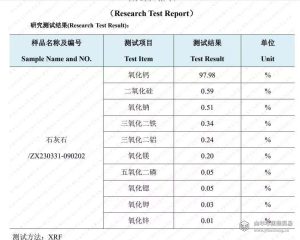
First confirm the product, lot, sampling date and test items the report covers, then check each one against your specification and end use.
We source industrial minerals directly from mines in Egypt and Jordan — mainly phosphate rock, calcium carbonate and iron oxide yellow — and supply them on steady schedules to factories and traders.
The usual flow runs: sourcing at origin → third-party inspection → cross-border shipping → clearance at the discharge port → onward delivery. We handle the whole chain.
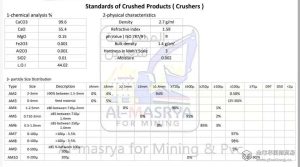
Our standard ranges are listed on the product pages, and every shipment carries a Certificate of Analysis from an independent third party covering grade, particle size and impurities. Tell us the grade and volume you need and we will confirm what we can load for your window.
Every shipment is assayed for composition and quality by an independent third party, with the report attached to confirm the agreed specification.
Minimum order quantity depends on the shipment mode: from 2,000 t for a container shipment, from 50,000 t for a bulk vessel. Lead time is approx. 10 days for a container shipment and approx. 15 days for a 50,000 t bulk cargo. Contact us via the details on this page and we will quote against your specification and tonnage.
Articles in this knowledge base cluster into a few themes. If you are new to importing minerals, start with fundamentals and process. If you already buy and need to solve a specific problem, go to selection and cost. If you handle documentation and disputes regularly, see the documentation and risk-control section.
If your time is limited, read in this order — each step builds on the previous one, and skipping tends to miss key premises.
Applications, indicator systems and processing differ completely across minerals. First separate the phosphorus source (phosphate), the filler (calcium carbonate) and the colorant (iron oxide yellow), then understand each set of indicators — CaO/MgO and heavy metals for phosphate, whiteness and particle distribution for calcium carbonate, tinting strength and dispersibility for iron oxide yellow. Without this step, price comparison is meaningless.
The real cost of imported minerals combines the ore price, freight and insurance, duty and VAT, terminal charges, inland transport and FX. Looking at the ore price alone understates it. Normalising every quote to a delivered basis before comparing makes the conclusion reliable — and often reveals that a cheaper quote is not actually cheaper.
Sampling representativeness, analytical method, umpire laboratory, certificate-of-origin eligibility and loading windows should all be settled before signing rather than negotiated after a problem appears. Agree the arrival re-test mechanism and dispute path in advance. Most disputes are hard not because the amount is large, but because nothing was agreed upfront.