

The biggest pitfall when sourcing minerals from the Middle East is rarely the headline price. It is the gap between assuming something was agreed and actually agreeing it. Grade, particle size, Incoterms, the assaying party and the shipping method: leave any one of those vague and it can turn into a dispute later. Here is what each one involves.

1. Grade and Particle Size: Fix the Specification First
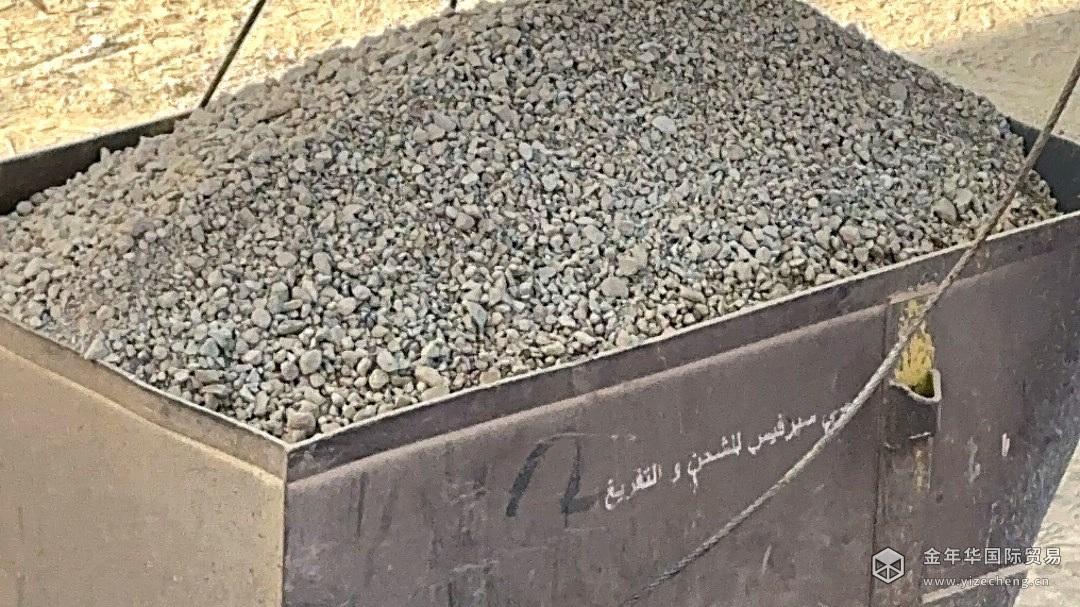
Words like “phosphate rock” or “calcium carbonate” do not constitute a specification. Take phosphate rock: the core indicator is P₂O₅ content, with P₂O₅ of 30% or above generally treated as high grade, 20%–30% as medium to low grade requiring beneficiation, and below 20% used mainly for chemicals or basic processing at the mine. Beyond the main content, impurity indicators such as Fe₂O₃, Al₂O₃ and MgO, along with moisture and particle size, all affect acid consumption and energy use downstream.
Particle size also needs to be reduced to numbers. Two products both labelled “powder” can carry very different size bands and very different crushing and grinding costs downstream. The more precisely the specification is written, the fewer disputes at acceptance. More Than One Kind of Phosphate Rock: Rock Phosphate, Sedimentary Phosphorite and Grade Classification goes into grade bands and impurity profiles in more detail.
2. Incoterms: What FOB, CFR and CIF Really Differ On
All three terms apply only to sea and inland waterway transport, and the difference between them comes down to four questions: who books the vessel, who pays the freight, who buys the insurance, and the moment risk passes from seller to buyer. The first three govern money; the fourth governs who carries the loss when something goes wrong.
The crucial point is that the moment of risk transfer is identical across all three — the instant the goods are loaded on board. CIF sounds as though the seller is responsible all the way to the destination port, but in practice risk has already passed to the buyer at loading. If the cargo is lost at sea, the buyer carries the loss first and then claims under the policy. Buying CIF does not mean the transport risk is out of your hands.
Which one to choose depends on your own logistics capability. If you know the route, can obtain better freight rates and want to control the forwarder, take FOB. If you prefer to keep things simple, or the supplier has stronger logistics capability, take CIF — but remember that the freight inside the price includes the seller’s margin, and that the insurance covers only minimum cover. A full comparison of the terms and the cost checklist is in FOB, CFR or CIF: Choosing Incoterms and Delivered Cost.
3. Source or Trader?
The more layers in between, the more margin gets stacked into the price and the more distorted the information becomes. Traders are not without value: financing, documentation and small-parcel consolidation all need someone to handle them. But for large, steady volumes over the long term, going to the mine directly rather than through intermediaries usually offers advantages in both price and the speed of quality feedback.
A more practical approach is to tier your supply. Base volume goes to direct sourcing from the source or a first-tier agent, while emergency and trial quantities come from traders. When assessing a supplier, do not look only at the quotation; look at supply stability, delivery record and how disputes are handled. The assessment framework is in How to Choose a Mineral Supplier: Evaluation and Risk Control.
4. Third-Party Assay: Essential Before Shipment
A mismatch between the seller’s report and the buyer’s re-test is the most common dispute in mineral trading. Both laboratories may be doing nothing wrong: the difference usually lies in the sample — whether it came from the same lot, and whether it captured a representative portion.
So the success of this step rests on how the sampling and sample preparation were conducted, not on the technical difficulty facing the laboratory. Sampling bulk minerals requires a plan built around three variables: number of increments, distribution of sampling points and increment mass. Sample preparation reduces particle size through crushing, blending and splitting, and splitting must follow thorough blending. Having a third party acceptable to both sides carry out sampling and assay before shipment, and sealing the retained sample until the objection period agreed in the contract expires, is the lowest-cost way to move risk forward. The operating detail is in Mineral Sampling and Preparation: Increments, Splitting and Representativeness.
5. Match the Shipping Method to the Volume
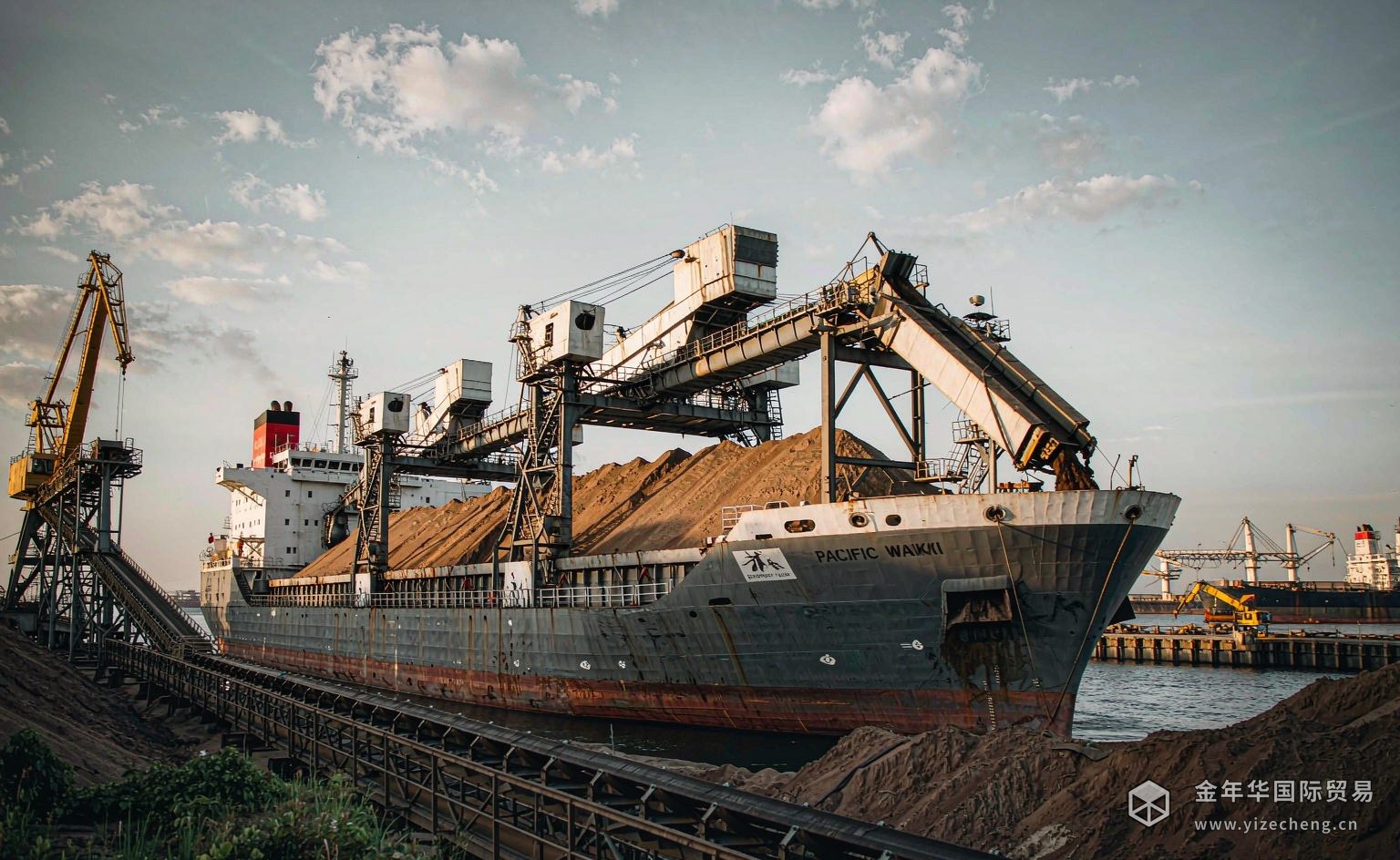
Large volumes of low-value ore move by bulk carrier at a lower unit freight. Small volumes, high-value grades or moisture-sensitive products suit containers better. Beyond freight, port handling capability, storage conditions and arrival windows all matter. Route options from the Middle East to China are limited, and freight is clearly exposed to regional disruption, so settling the shipping method before signing is far cheaper than adjusting after arrival.
Conclusion
The logic running through all five points is the same: turn every step where disagreement could arise into a verifiable number or a written term at the contract stage. Write the specification as numbers, state which point risk transfers under the chosen Incoterm, name the sampling basis and the third-party body for assay, and specify the shipping method that matches the volume. Do that, and both enquiry and contracting become considerably smoother.
Related Reading
FOB, CFR or CIF: Choosing Incoterms and Delivered Cost
Mineral Sampling and Preparation: Increments, Splitting and Representativeness