

Landed Price Is Not the Purchase Price
Many newcomers look only at the FOB or CFR number, but what really determines your plant cost is the full landed and duty-paid figure. Taking imported phosphate rock earlier this year as an example, the January–February average import price was about USD 85/t, and by April it was back around USD 95/t (Jordan’s return to supply and high-priced Peruvian cargo both pushed it up). That is cargo value only, before the layers of cost added on top.
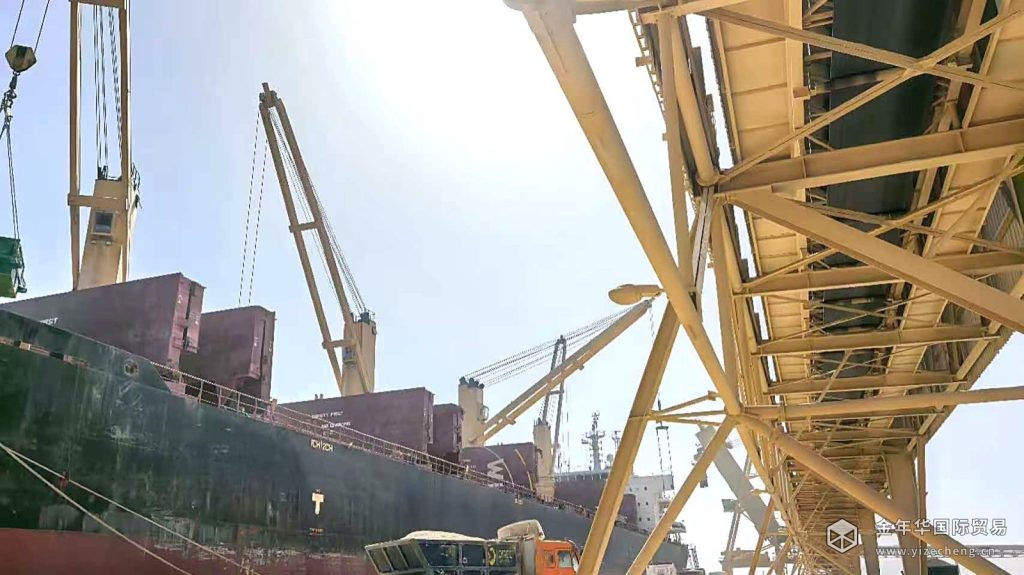
Breaking Down One Cargo
Assuming CFR of USD 95/t, the rough composition looks like this:
- Cargo value: USD 95/t.
- Freight and insurance: included under CFR, but under FOB terms you carry this yourself, and it swings widely amid Red Sea disruption.
- Port and clearance: port charges, handling, customs declaration and third-party assay — small per tonne, but not to be missed.
- Exchange rate: settling in US dollars means a weaker renminbi lifts your cost by several points.
- VAT: mineral imports involve input tax, ultimately affecting cash flow and tax burden.
Stack these together and a USD 95/t cargo usually has to be recalculated at the exchange rate and tax rate of the day before it reaches the plant books — which is not the same number as the quotation.
How Buyers Avoid Being Bitten by Hidden Costs
- Choose terms deliberately. For large bulk volumes prefer CFR or CIQ landed price and leave shipping risk with the seller; for smaller high-value grades, consider FOB and control it yourself.
- Leave room for FX. Agree a fluctuation band when signing rather than piling all the risk onto the moment you lock the price.
- Stagger arrivals. Do not concentrate arrivals in the peak season — port congestion and storage fees quietly eat margin.
Only when you can calculate the full landed cost do you have the confidence to negotiate with suppliers and report cost internally.
A Full Landed-Cost Checklist
Turning a quote into a cost means working through this list item by item:
- Cargo value: FOB or CFR unit price × the quantity used for settlement (mind wet-tonne versus dry-tonne basis).
- Freight and insurance: CFR includes freight; CIF adds insurance; under FOB the buyer carries both.
- Port charges and discharge: terminal handling, storage and demurrage — demurrage risk matters especially for bulk cargo.
- Customs and compliance: brokerage, inspection and quarantine, and any laboratory testing fees.
- Taxes: import VAT and applicable duty rates, which directly consume cash flow.
- Inland transport: road or rail from the port of discharge to the plant; the longer the haul, the less this can be ignored.
- Losses and moisture: weight loss in transit and handling, plus moisture conversion differences.
Choosing the Trade Term
For large bulk cargoes with a fixed destination port, negotiate CFR or CIF and leave shipping and insurance risk with the seller. For small, high-value grades where you want to control the schedule, FOB is reasonable. If you want the seller to carry some post-arrival responsibility, DAP can be discussed — but the quote will typically be higher, because the extra responsibility is priced in.
The Two FX Moments and the Tax Question
Currency risk concentrates at two points: the contract rate and the payment rate, and the gap between them lands directly in your P&L. A common approach is to agree an FX fluctuation band with sharing beyond that band. On the tax side, confirm the commodity code and applicable duty rate in advance — one wrong classification changes both cost and compliance risk. See our note on imported phosphate rock commodity codes and declaration.
Frequently Asked Questions
How far does landed cost differ from the quote?
There is no fixed ratio; it depends on distance, taxes, FX and port charges. The right method is to run your own numbers through the list above rather than applying a rule-of-thumb percentage.
How do I get a usable basis for procurement?
Phosphate rock prices move with grade, origin, shipping schedule and exchange rates, and this site does not publish a list price for ore. Once you have a current supplier quotation, confirm which trade term and grade basis it uses, then work through the list above to build the full delivered cost — that is the only basis on which offers can be compared.
What is the most common mistake in price comparison?
Comparing figures on different bases — for example, a domestic tax-inclusive delivered price against an imported CFR price. That conclusion is guaranteed to be wrong. Normalise everything to full delivered cost and comparison becomes meaningful.
Further Reading
- Mineral Procurement: A Full-Process Guide from Sourcing to Cost Reduction
- Phosphate Rock Procurement Guide: Grade Pricing, Quality Penalties and Landed Cost Calculation