

According to the latest weekly data from Mysteel, Chinese CFR (cost and freight) quotes for 26%–27% P2O5 phosphate rock imported from Egypt have held in the USD 90–95/t range and remained broadly stable.
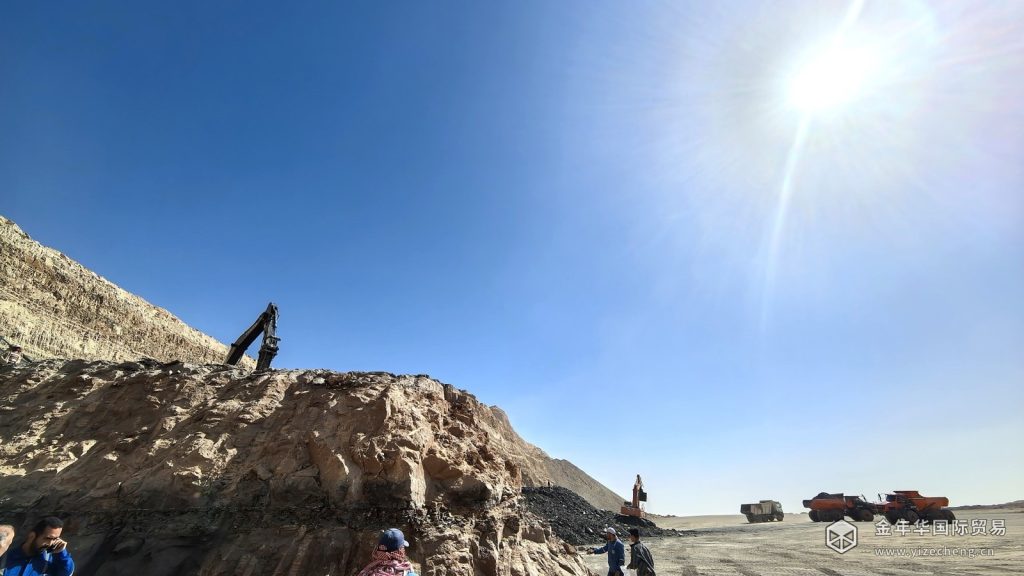
On the demand side, a suspension of agricultural phosphate fertiliser exports and the seasonal low season have kept utilisation rates at domestic phosphorus chemical plants low, leaving purchasing demand generally weak. Domestically, 28% grade phosphate rock in Hubei was quoted at RMB 950–980/t delivered to station, with some small and medium mines widening discounts to ease inventory pressure.
By comparison, Indian 70BPL (about 32% P2O5) phosphate rock was quoted at around USD 190/t CFR, a clear spread against imported ore in China.
Procurement takeaway: for importers buying directly from Middle East and North African producers, imported ore prices remain high and are unlikely to fall much in the short term. Amid export restrictions and soft demand, prioritise long-term contracts and staged restocking rather than chasing the market, and watch shipment pacing and quality consistency from key producers such as Egypt and Jordan.
(Source: Mysteel weekly data. Please refer to the original source before publication.)
How to Read These Numbers
Separate three conventions before comparing anything. First, the trade term: CFR covers cargo value and ocean freight only — not insurance, discharge or clearance at destination. What actually lands in your plant is the full landed and duty-paid figure, and the two should never be mixed. Second, the grade basis: 26%–27% P₂O₅ is the usual range for imported ore, and international quotes are sometimes expressed in BPL (tricalcium phosphate equivalent), where %P₂O₅ ≈ %BPL × 0.4576. The Indian 70BPL cargo therefore works out to roughly 32% P₂O₅ — so USD 190/t is not a threefold premium for the same grade, it is a different grade going to a different destination. Third, the delivery basis: the same cargo quoted to India and to China carries different freight, FX and tax treatment, so cross-market unit-price comparison has no meaning.
Putting Imported and Domestic Ore on the Same Footing
Hubei’s 28% grade at RMB 950–980/t delivered to station is a domestic spot, tax-inclusive destination price. Imported ore at USD 90–95/t is CFR, tax-exclusive and excluding port charges. To compare them you must convert the import at the prevailing exchange rate and then layer on port charges, customs clearance, third-party assay, VAT and inland freight — in other words, work out the full landed cost of imported phosphate rock. Once you do, the advantage of imported ore usually shows up as grade consistency and controllable impurities rather than a lower headline price. For feed-grade and fine phosphate applications sensitive to iron, aluminium and magnesium, batch consistency is worth more than a few dollars.
Three Things to Watch Next
- Egyptian shipment pace. Egypt is the main current supplier to China; export policy and mine scheduling directly set next quarter’s arrivals.
- Jordanian volumes. With Jordan back in the market, its landed price provides a downward anchor for the whole Middle East complex.
- Freight and FX. Red Sea diversions lift freight and currency swings amplify cost — two variables buyers cannot hedge away but must budget a buffer for.
One piece of context: Morocco holds the largest share of global phosphate reserves and production, and its moves influence international market sentiment. Morocco is not a supply origin for this site — imported phosphate rock here comes from direct sourcing in Egypt and Jordan, and Moroccan figures are cited as market background only.
Frequently Asked Questions
What does imported phosphate rock cost per tonne right now?
This week CFR quotes for 26%–27% P₂O₅ Egyptian phosphate rock into China sit in the USD 90–95/t range, on a cargo-value-plus-freight basis. Converting that into a delivered-to-plant cost still requires adding FX, port charges, taxes and inland freight; it is not a landed per-tonne price. For actual pricing, please refer to the confirmed offer at the time.
Is “phosphate raw ore” different from ordinary phosphate rock?
In everyday use the two are effectively synonymous and both refer to unprocessed phosphate rock (phosphorite). Strictly speaking, “phosphate raw ore” emphasises the end use — ore destined for phosphoric acid and phosphate production — and the core indicators remain P₂O₅ grade and iron, aluminium and magnesium impurity levels.
Should I stock up now while prices are flat?
Not necessarily. When prices are flat but demand is soft, small and medium mines tend to widen discounts, which signals accumulating inventory pressure. A steadier approach is to hold a base volume on contract and split spot replenishment into small batches rather than chasing the market in one move.