

Jordan broke ground on 5 October on a 403-kilometre freight railway linking the phosphate mines at Al-Shidiyeh with the Red Sea port of Aqaba, a project valued at about US$2.5 billion and designed to carry roughly 16 million tonnes of minerals a year. King Abdullah II and Sheikh Khaled bin Mohamed bin Zayed Al Nahyan, Crown Prince of Abu Dhabi, attended the ceremony in Aqaba (sources: Aletihad, 2026; RailFreight, 2026-10-19; Rail Journal, 2026-10). For buyers of Jordanian rock, the interesting number is not the headline investment. It is the 13 million tonnes of phosphate the line is meant to move annually in its first phase, and what that does to the cost of getting rock from mine to vessel.
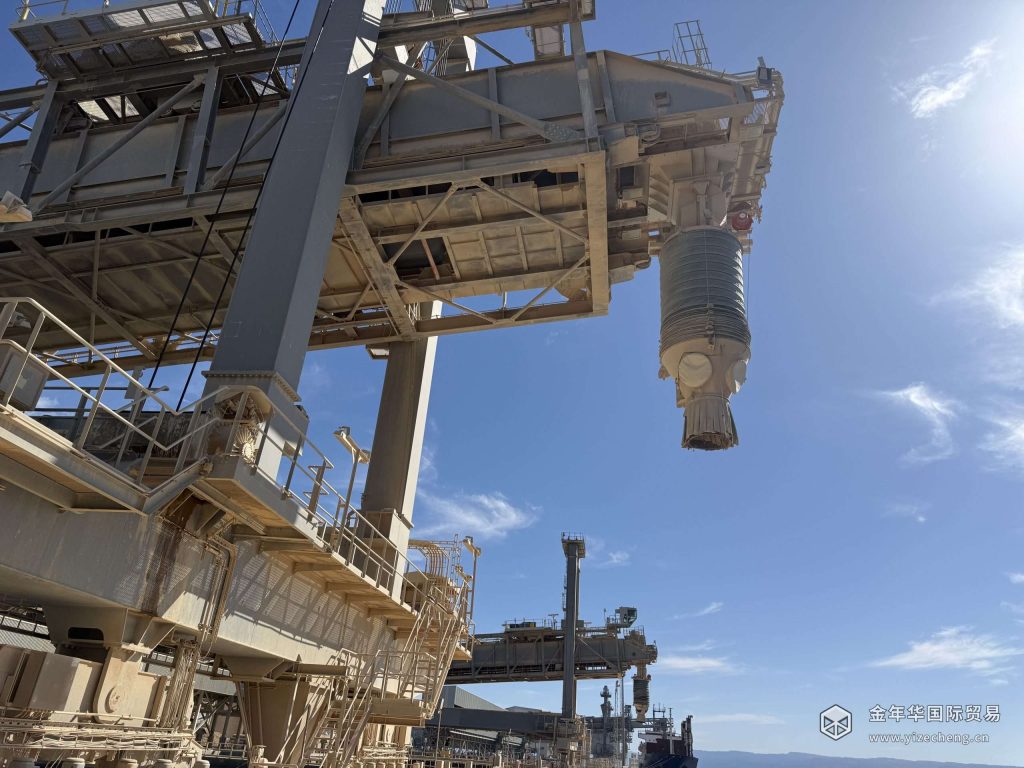
What was actually announced
The project is the Aqaba–Al-Shidiyeh–Maan Railway, developed by the Jordan-UAE Railway Company. It runs 403 km from Aqaba through the southern mining belt to the Maan Logistics Zone, and will handle both bulk cargo and containers between ports, production sites and inland logistics facilities. Construction includes about 55 bridges and six tunnels. Jordan’s government has described a roughly five-year build, and no opening date was given at the groundbreaking.
Capacity is stated at about 16 million tonnes of minerals annually. In the first phase, around 13 million tonnes of phosphate would move from Al-Shidiyeh to Aqaba each year, alongside some 2.6 million tonnes of potash from Ghor Al-Safi (Rail Journal, 2026-10). The developers estimate the line will cut phosphate and potash transport costs by around US$40 million a year and create roughly 5,000 jobs in southern Jordan.
Ownership matters for how the project behaves commercially. The project company is split evenly between Abu Dhabi’s L’IMAD Holding and four Jordanian shareholders: Jordan Phosphate Mines Company (JPMC), the Government Investments Management Company, the Social Security Investment Fund and Arab Potash Company. Etihad Rail will lead development, contributing experience from building and operating the UAE network. In other words, the two producers whose cargo the railway depends on are also equity holders in the railway.
Why mine-to-port haulage is the part that matters
Phosphate rock is a low-value, high-volume cargo. On a tonne of rock sold FOB Aqaba, the inland leg from the mine to the berth is a visible slice of the cost stack, and it is the slice a buyer never sees on the invoice. It shows up indirectly, as the gap between what the mine needs to earn and what the FOB price can bear.
Road haulage sets that cost with diesel, truck availability, road condition and driver supply. It also sets it with variability: a blocked road or a queue at the port gate translates into late arrivals at the berth, which translates into vessel waiting time, which translates into demurrage risk that someone eventually pays for. A dedicated rail corridor with scheduled departures changes the shape of that risk. It makes arrival windows predictable, which is what a ship operator needs before committing a vessel to a loading port.
The stated US$40 million annual saving across phosphate and potash is a system-level figure, not a per-tonne number a buyer can bank. But the direction is clear: cheaper, more predictable inland logistics support either a more competitive FOB offer or a better margin for the producer, and usually some mix of both over time. It also raises the effective export capacity of Aqaba without a single new tonne of mine output, because faster turnaround means more cargo through the same berths.
What it does not change, at least not soon
Four things stay as they are, and buyers should not price them out of the market on the strength of a groundbreaking ceremony.
First, mine output. The railway moves rock; it does not produce it. Until the line is operational, and probably for a while after, the volume JPMC can offer is set by its mining, beneficiation and blending capacity, not by rail capacity.
Second, grade and impurity profile. Al-Shidiyeh ore is what it is. A cheaper inland leg does not alter P₂O₅ content, cadmium, MgO or moisture, and buyers still need an assay per lot. The fundamentals of reading a specification are unchanged, and our guide to QC and assay reports covers what to check.
Third, the timeline. Five years of construction from late 2026 points to the early 2030s for full operation. Any 2026–2028 procurement plan that assumes rail-borne Jordanian rock is planning on something that does not exist yet.
Fourth, allocation and export policy. Who gets the tonnes, under what contract terms, and whether raw ore leaves Jordan at all are policy questions, not logistics questions. Jordan has been a stable supplier while Egypt has tightened raw ore exports, and that contrast is the reason many buyers now hold both origins in their basket. Our page on Jordanian phosphate rock sets out the loading and specification basics.
The regional picture this fits into
Jordan is not building this line in isolation. The same corridor is described by Jordanian officials as the nucleus of a wider network that could eventually reach Saudi Arabia, Syria, Türkiye and beyond, with Aqaba positioned as a combined sea-road-rail gateway. The Maan dry port and customs facilities are part of the same plan, and integration between the two is explicitly cited as a design goal.
For a buyer in Asia, the Gulf or East Africa, the practical reading is that Aqaba is being set up to handle more bulk volume with shorter turnaround, and that Jordan is investing in staying a long-term export origin rather than a marginal one. That is a supply-security argument, not a price argument, and it should be weighed as such.
It also sharpens the comparison with Egypt. Egyptian rock from Safaga and Jordanian rock from Aqaba compete for overlapping buyer pools, and the two origins differ in grade, impurity profile, freight distance to Asian ports and now, increasingly, inland logistics quality. Sourcing from both, with specifications written per origin rather than per “phosphate rock” generically, is the more durable approach. We source from both origins directly and ship worldwide through our Dubai entity, with no transit through China; the Egyptian phosphate rock page covers that side of the pair.
What a buyer should do now
Ask suppliers how much of the FOB price is inland freight, and whether that component is fixed for the contract term. Most offers bury it. Knowing the number gives you a basis for renegotiation once the railway starts moving cargo, and a check on whether a current offer is priced off road haulage costs that are about to fall.
Write arrival windows, not just delivery months. If a supplier cannot commit to a laycan because trucking is unpredictable, that is a signal about the port-side risk you are carrying, and it belongs in the contract as a demurrage allocation clause rather than a verbal assurance.
Keep both origins qualified. Qualifying a new origin takes samples, assays and usually a trial lot. Doing that work while supply is comfortable is cheaper than doing it during a disruption. Our minerals portfolio page lists what we hold across origins, and the market watch page tracks the price and freight context.
FAQ
Does the railway mean more Jordanian rock will be available in 2027? Not from the railway itself. Volume in the near term depends on mine and plant capacity. The line is a logistics project with a roughly five-year construction window.
Will FOB Aqaba prices fall? The cost structure improves at the system level, with the developers citing about US$40 million a year across phosphate and potash. Whether that reaches the FOB price depends on the producer’s margin position and on market balance at the time, and no one has committed to passing it through.
Is this relevant to buyers outside Asia? It is relevant to any buyer loading at Aqaba, since port turnaround and inland reliability affect everyone using that berth. The cargo itself is not destination-specific.
Related Reading
- Calcium Carbonate Demand: Where GCC and PCC Prices Actually Split
- Egypt Halts New Phosphate Export Contracts, Jordan Resumes Supply: the Middle East Sourcing Landscape Is Shifting
- Jordan Expands Calcium Carbonate Capacity, Speeds Up Exports to Asia
- Rising Sea Freight and Mineral Import Landed Cost: Sept 2026