

Calcium carbonate is usually discussed as one market. Commercially it is at least three: bulk ground carbonate sold as a cheap filler, surface-treated ground carbonate sold as a functional filler, and precipitated carbonate sold as an engineered product. The price gap between the first and the third is wide enough that treating them as one commodity leads to bad comparisons. QY Research puts global coated calcium carbonate sales at about 13.6 million tonnes in 2025, at a weighted global ex-works average of roughly US$255 per tonne, with plastics taking about 52% of that volume (QY Research, Coated Calcium Carbonate 2026–2032, 2026).
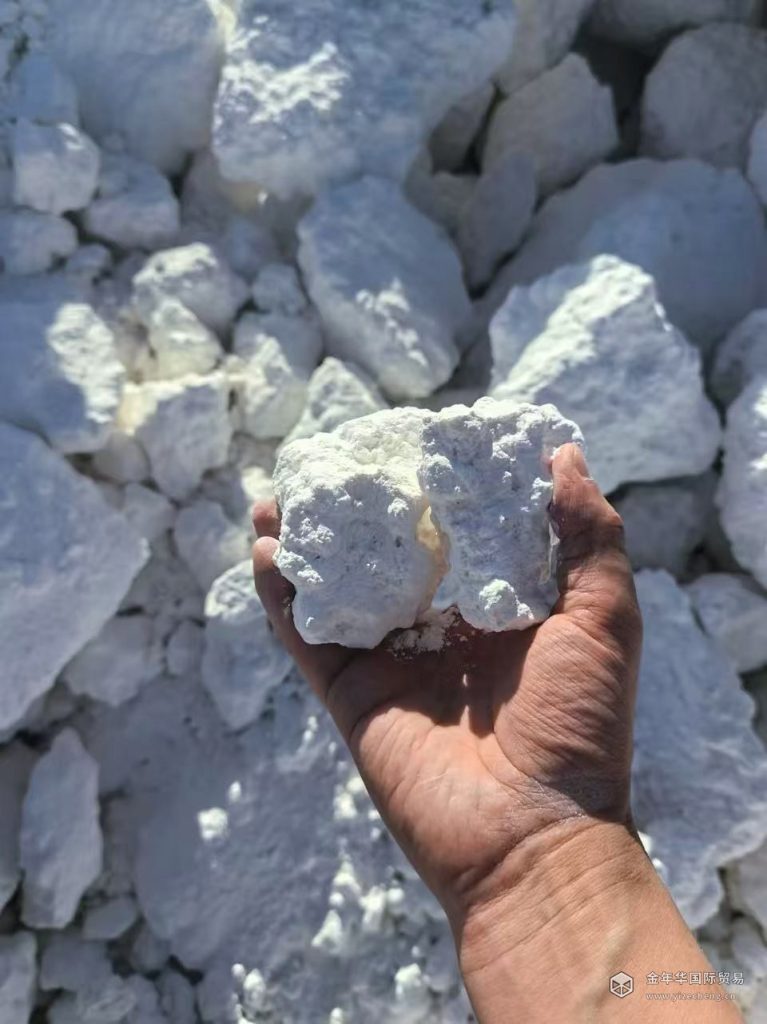
The volume picture: ground dominates, plastics set the tone
Within coated material, ground calcium carbonate (GCC) accounts for about 79% of global volume; precipitated calcium carbonate (PCC) takes the remaining 21% but commands higher unit values because ultrafine PCC grades go into sealants, adhesives and rheology-sensitive polymer systems. By application, plastics are the largest outlet at roughly 52%, rubber about 12%, and sealants and adhesives together about 16%. Coatings, inks, paper and construction materials absorb most of the rest.
The plastics number is not surprising once you look upstream. Global plastics output reached 430.9 million tonnes in 2024, with Asia at 57.2% and China alone at 34.5% (industry association data, cited in the same QY Research study). A filler that substitutes for resin at a fraction of the cost will track plastics output closely, and the growth in filled PVC compounds, films and masterbatch is what keeps GCC volumes steady even where construction demand is flat.
The market is also fragmented. The top five producers hold about 22% of volume and the top ten about 28%. That matters for buyers: there is no cartel setting the price, and regional producers with limestone access compete hard on freight and local service. It also means quality consistency varies more than in a consolidated industry, so supplier qualification carries real weight.
The price ladder: three products, three ranges
Current industry pricing puts bulk industrial GCC in a range of about US$150–210 per tonne, while engineered PCC grades trade at roughly US$260–340 per tonne depending on purity and particle size (IMARC pricing data, compiled April 2026). The coated average of US$255 per tonne sits between the two, which makes sense: coating adds a processing step and a surface-treatment cost to a ground product. The spread inside the PCC band is wider still, as we set out in why PCC quotes vary threefold.
Three variables explain most of the spread within each band. Particle size distribution comes first; tightening D97 from 10 microns to 5 microns cuts mill throughput and raises cost per tonne. Brightness comes second, because high-brightness deposits are less common and matter in paper, paints and white compounds. Surface treatment comes third: fatty acid treatment is the volume standard at roughly 82% of coated sales, with silane coupling and composite systems at about 5% and 8% respectively, priced for performance rather than for tonnage.
A buyer comparing a US$170 offer against a US$300 offer is usually comparing an uncoated coarse filler against a coated fine grade, not two prices for the same product. The comparison only becomes meaningful when grade, D97, brightness, activation level and moisture are fixed on both sides.
Where the tonnes sit, and why local supply keeps winning
China accounts for about 36% of global coated carbonate demand, and the rest of Indo-Pacific for about 24%. The remaining volume is spread across smaller regional bases, including the Gulf, North Africa and Latin America, where demand is smaller but local limestone resources and coating capacity are real. QY Research names Emirates Calcium Carbonate Factory, Northern Minerals and Egyptian Carbonate Company among the producers that have made coated supply a regional business rather than a multinational one.
That regionalisation is the single most important structural fact for sourcing. Carbonate is heavy and cheap. Freight is a large share of delivered cost, which caps how far commodity grades travel economically and rewards suppliers who can grind close to the customer. It also explains why Gulf construction demand is served largely by Gulf grinding plants, and why Asian compounders increasingly buy from Vietnamese, Indonesian and Middle Eastern suppliers rather than from the largest global producers.
The exception is specialty PCC. Where a grade is qualified into a sealant or adhesive formulation, switching suppliers means re-running stability and adhesion tests over months. That qualification barrier is why PCC prices hold up better in a soft market, and why buyers treat PCC suppliers as long-term partners rather than spot counterparties.
What actually drives the GCC-or-PCC decision
The choice is set by the formulation, not by price per tonne. High-loading PVC pipe and profile compounds want coarse-to-medium coated GCC: cheap, stiffening, easy to disperse at 20–30% loading. Thin films and masterbatch want finer, narrowly distributed grades because gels and agglomerates show up as surface defects. Cable compounds and automotive underbody systems lean toward fine coated GCC or PCC for impact and rheology. Sealants and structural adhesives are PCC territory, where controlled morphology and oil absorption determine whether the bead holds its shape.
Paints and coatings are a hybrid case. Ultrafine coated carbonate partly replaces titanium dioxide, which is the most expensive component in the formulation, so the value calculation is not “filler versus filler” but “how much TiO₂ can I displace without losing opacity”. That is why a grade costing twice as much per tonne can still reduce total formulation cost.
Two practical consequences follow. First, ask for the application, not just the specification, when requesting a quote. Second, test at the loading level you actually intend to run; a sample that disperses well at 15% loading may fail at 30%.
Buyer checklist before the next tender
Fix the specification sheet so that price comparisons are real: D97 or D98, brightness, activation or coating level, oil absorption, moisture, HCl-insoluble content, and the surface-treatment chemistry. Without these, quotes are not comparable and the cheapest number is often the coarsest product.
Separate freight from product cost. On commodity GCC, the delivered price is heavily freight-driven, so a supplier with a slightly higher ex-works price and a shorter sea leg can still land cheaper. Ask for the freight component separately, and ask what happens to it if rates move during the contract.
Qualify a second origin while supply is comfortable. Our calcium carbonate range covers ground and surface-treated grades from Egyptian origin, shipped directly from the Mediterranean side and executed through our Dubai entity, with no transit through China. For buyers running both carbonate and phosphate, the same vessel or the same forwarder can sometimes serve both, which is worth exploring when freight rates are moving.
Finally, decide how much risk sits in the qualification. Commodity filler can be dual-sourced cheaply. A qualified PCC grade cannot, so it deserves a supply agreement with volume commitments rather than a spot strategy. Our minerals portfolio page lists the grades we hold, and QC and assay reports explains what documentation should accompany each lot.
FAQ
Is coated carbonate always better than uncoated? No. Coating improves dispersion and allows higher filler loading in polymers, but it adds cost and can hurt performance where the formulation needs an uncoated, hydrophilic surface. The right answer depends on the resin system and the loading target.
Why is PCC more expensive than GCC? PCC is synthesised through a controlled precipitation process rather than ground from limestone, which costs more but delivers tighter control over particle shape, size distribution and brightness. That control is what sealant and adhesive formulators pay for.
How much does origin matter for carbonate? Less than for phosphate rock, because carbonate specifications are mostly about physical properties rather than impurity chemistry. Origin matters most when brightness or a specific impurity limit is tight, and when freight distance changes the delivered cost.