

Egypt Phosphate Rock
From the high-grade sedimentary phosphate belt in Egypt — a base material for phosphate fertilizer and phosphoric acid. Sourced directly, with stable grade and lead time.
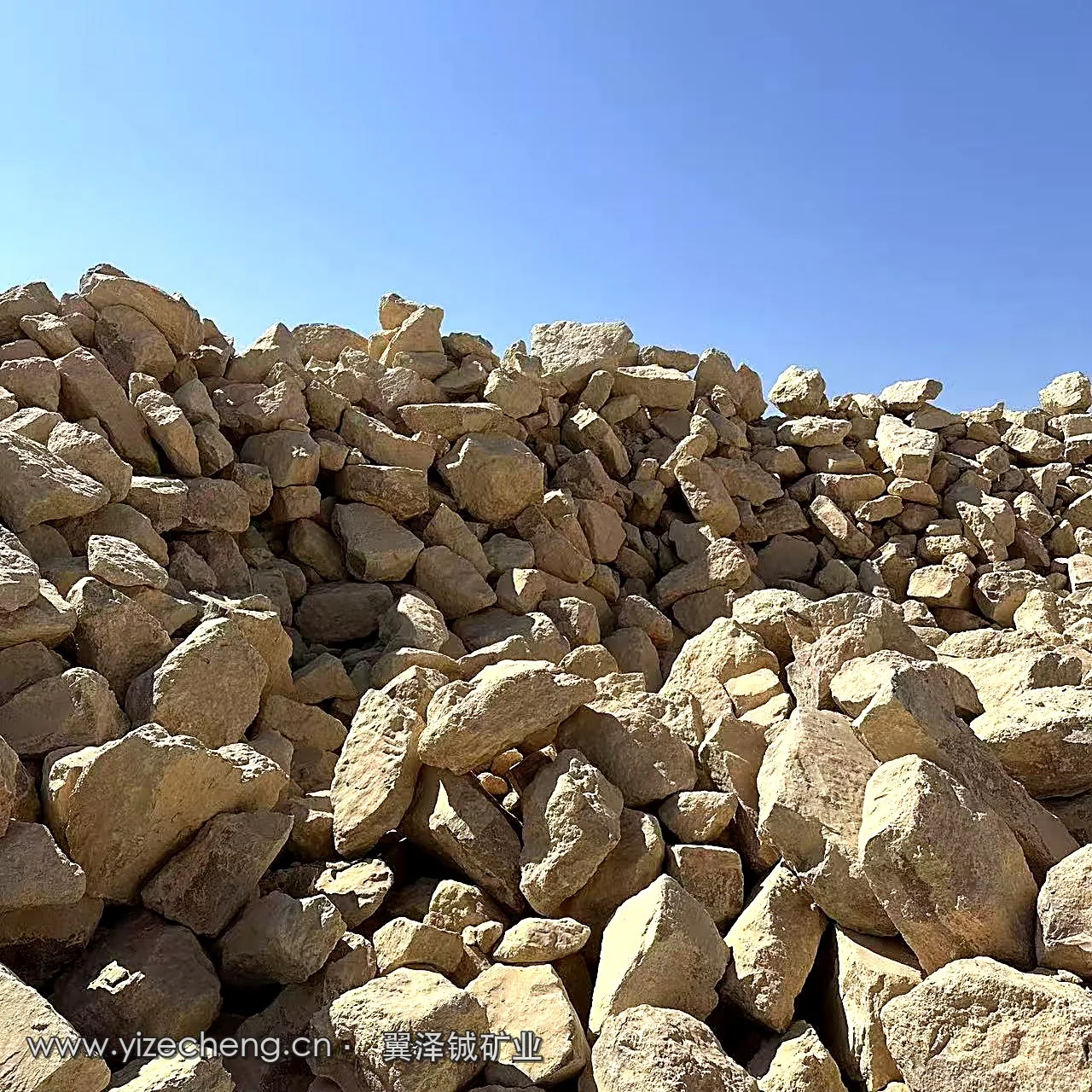
Ore Properties & Applications
Sourced from the high-grade sedimentary phosphate belt on the Red Sea coast of Egypt — stable seams and controllable impurities make it an excellent base material for fertilizer and phosphoric acid. Working directly with the mines lets us secure both grade and lead time.
- P₂O₅ Content: 28–32% (gradeable)
- Particle Size: Run-of-mine / fines (-200 mesh, adjustable)
- Main Impurities: CaO, SiO₂, MgO controllable
- Packaging: Bulk / jumbo bags
Applications: Phosphate fertilizers (DAP/MAP), phosphoric acid and feed-grade phosphates.
Request a Quote →From Mine to Berth: Six Things to Watch When Buying Egyptian Rock Phosphate
Imported Egyptian rock phosphate is a sea-freight mineral: the decision is not about the headline quote alone, but about lining up source, grade definition, landed cost and customs documentation into one consistent chain. If any link disagrees with the others, the final cost typically lands several percentage points above plan. Below are the six items buyers ask us about most, and where mistakes most often happen.
Origin and mining rights: confirm whose mine it is first
Egyptian phosphate is concentrated along the Red Sea coast around Safaga and Newabaia, where mining rights sit with a small number of large state-linked operators and output is shaped by national export policy. With tighter control on high-grade mining and stricter export administration in recent years, availability has changed versus historical patterns. Before contracting, confirm which specific mine the cargo comes from and whether the seller currently holds export qualification.
Grade definition: what else needs to be agreed beyond P₂O₅
The industry convention is to price on P₂O₅ content, but what actually drives disputes is the accompanying specification. A sound contract should fix at least: maximum moisture, particle-size range, the CaO/MgO ratio ceiling, silica and fluoride content, and chloride levels. These determine whether the ore suits the buyer's acid or fertiliser process — high magnesium, for example, raises acid consumption and drives equipment scaling. Stating all of these prevents far more friction than a single P₂O₅ number.
Landed cost: what happens beyond the FOB price
The FOB quote is only the starting point. The real delivered cost also includes international freight and insurance, import duty and VAT, terminal and demurrage charges, inland transport and warehousing, and FX translation effects. Red Sea freight rates are strongly influenced by geopolitical conditions — routing around the Cape of Good Hope extends voyage time and raises premiums, and that has to be built into the model. Grade premium and penalty clauses should also be contractual: specify how price adjusts when assay results fall above or below the benchmark grade.
Sampling and preparation: how much say you actually have over a cargo
Most disputes on imported minerals trace back to unrepresentative sampling. A sound procedure takes increments from multiple points across the cargo, blends and reduces them to the required laboratory particle size, and has an independent laboratory issue the certificate of analysis. Three things matter: sampling is witnessed jointly or by an agreed third party, seals and chain of custody are fully recorded, and the analytical method plus umpire laboratory are agreed in advance. Without that, a re-test dispute has no evidentiary trail to follow.
Customs documentation: align it before arrival, not after
The HS classification and declaration basis for imported phosphate rock should be confirmed in advance — in particular the distinction between code 2510.10 and 2510.20, since the tariff treatment directly affects duties. The document set normally includes the certificate of analysis, packing list, bill of lading, certificate of origin, plus contract, invoice and customs entrustment. The certificate of origin is decisive: different schemes (general vs preferential) carry different duty treatment, so eligibility must be confirmed before booking, not repaired after arrival.
Long-term supply and performance record
The most costly mistake in imported mineral buying is re-bidding and re-vetting a new supplier for every cargo. A steadier approach is to set a quarterly or annual volume framework, agree the loading window, lock the grade and penalty terms, then review actual performance each quarter. The value is not only price — it is mainly lowering disruption risk, because switching to an alternative source always costs far more than maintaining a working relationship.
Price and loading for Egyptian rock phosphate
Grade and content data are listed above. Cargoes ship FOB from Egyptian ports — send your specification, required tonnage and preferred loading window, and we will come back with a quotation and a shipment schedule.
- Minimum order:from 2,000 t per container shipment; from 50,000 t by bulk vessel
- Lead time:approx. 10 days for a container shipment; approx. 15 days for a 50,000 t bulk cargo
- Port of loading:Safaga, Egypt — Red Sea coast
- Supply capacity:500,000 t per month across our Egypt and Jordan programmes
- Incoterm:FOB
- Payment:T/T
- Inspection:Pre-shipment assay by an independent third party, with the report travelling with the cargo; a buyer-nominated laboratory (e.g. SGS) is accepted
- Documents:Certificate of Analysis, packing list, bill of lading and certificate of origin
Buying Egyptian rock phosphate — where to read next
Comparing origins? See Jordanian rock phosphate →
Egyptian rock phosphate: common questions
Q1: Egyptian or Jordanian rock phosphate — how do they differ?
Both are major Middle Eastern sources, but mining rights, export policy and shipping routes differ. Egyptian supply is more affected by domestic export administration and sits at a shorter haul; Jordanian availability follows its own rhythm. We generally suggest a primary plus backup source rather than a single line, decided against your grade requirement and delivered-cost model.
Q2: how do we fix grade so there is no dispute on arrival?
Write the main and secondary specifications together: a P₂O₅ range, the CaO/MgO ceiling, a moisture cap and a particle-size band — and fix the analytical method, the umpire laboratory and the premium/pricing formula. Joint sampling, sealed samples and a complete chain of custody are what make a re-test meaningful.
Q3: how much beyond the FOB price should we budget?
Budget separately for international freight and insurance, import duty and VAT, terminal charges, inland transport and FX movement. Red Sea rerouting lifts both freight and premiums, and the magnitude moves with the market. Ask for a full landed-cost breakdown at quotation stage, itemised, rather than a single delivered figure.
Q4: what are the minimum order and lead time?
From 2,000 t per container shipment and 50,000 t by bulk vessel; lead time is roughly 10 days for containers and 15 days for a 50,000 t bulk cargo. Combined supply capacity across our Egypt and Jordan programmes is 500,000 t per month. Specific sailing windows depend on booking availability and are confirmed with the quotation.
Need a quote for Egyptian phosphate rock?
Tell us your required grade and volume — we reply with a proposal within one business day.