

On 15 June 2026, State Council Decree No. 839, the Regulations on the Implementation of the Mineral Resources Law, came into force. Phosphate rock was listed alongside lithium, rare earths and cobalt among China’s 36 national strategic minerals, subject to full-chain control covering exploration, mining, production, stockpiling and sales (gov.cn; analysis by NetEase and East Money, June 2026). The clause that matters most for procurement: high-grade phosphate rock with P₂O₅ ≥ 30% is in principle banned from direct export, only low and medium grades may apply for a licence under the rules, and pure trading companies may not export raw ore directly.
For buyers who rely on imported ore as a supplement, this means both the sourcing mix and the basis for price negotiation have to be reset.
1. Policy Has Sealed Off High-Grade Ore Exports
Under Decree No. 839, high-grade ore is subject to mandatory stockpiling at the point of production and is preferentially supplied to domestic new energy (lithium iron phosphate) and phosphate fertiliser chains, while external sales are tightly restricted. Mining rights approvals have been centralised, the annual output total is capped at 145 million tonnes, and approvals for new standalone phosphate mines have effectively stopped (see “Phosphate Rock Listed as a National Strategic Mineral: Output Cap Locked at 145 Million Tonnes, High-Grade Ore Banned from Export”).
The direct consequence: the volume of Chinese high-grade raw ore available on the international market shrinks sharply, even though buyers in the Middle East and South Asia were already focused on Chinese material. Tightening supply combined with new energy demand means the scarcity premium on high-grade ore will persist.
2. Import Sourcing Must Move to Low and Medium Grade plus Diversification
Since high-grade Chinese ore cannot leave the country, import procurement has to look to other source countries and use grade matching to fill the gap:
- Egypt and Jordan: North African phosphate rock is mid-grade and a traditional source for China. But the rhythm is unstable — in August 2026 Egypt briefly halted new phosphate export contracts while Jordan resumed supply, and the Middle East supply picture is still shifting (see “Egypt Halts New Phosphate Export Contracts, Jordan Resumes Supply”).
- Pakistan: 28–30% grade material trades at about USD 95–98/t CIF, and 25% grade at about USD 70/t CFR, mainly flowing to Guangdong, Shandong and the Yangtze River basin (Guanlinfei data, September 2026).
- Morocco’s OCP: the world’s largest reserves, but the group has long focused on exporting downstream processed products, so the volume of raw ore released is limited.
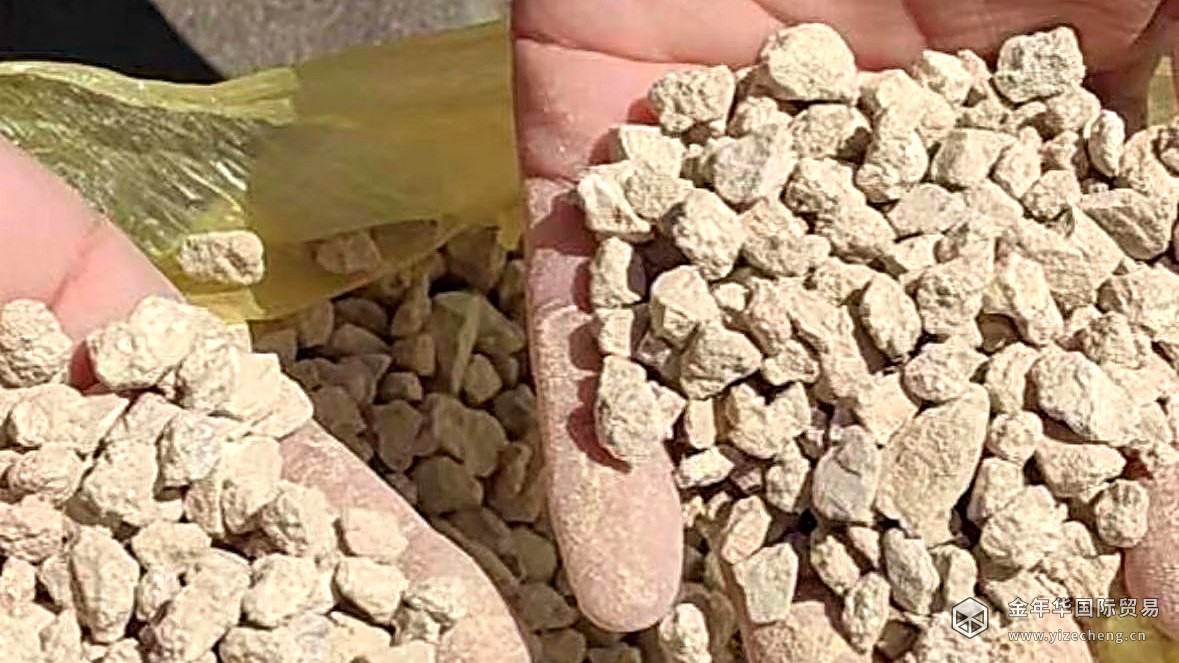
For buyers, the key is to fix the grade you actually need first. Phosphate rock is not better simply because it is richer — it depends on your processing route. Blending low and medium grades, or mixing imported ore with domestic low-grade material, is often more economic than chasing high grades (on grade classification, see “More Than One Kind of Phosphate Rock: Igneous, Sedimentary and How Grade Classification Works”).
3. Landed Cost and Negotiation: What Buyers Can Actually Control
Imported ore looks cheap on the quote, but by the time it reaches the plant you still have to count freight, exchange rates and inspection. Using Egyptian 26–27% ore landed in China at USD 95–100/t as a reference (Guanlinfei, September 2026; see also “Phosphate Rock Prices in Early September: Hubei 28% at RMB 950–980/t Ex-Wharf, Imported Ore at USD 95–100 CFR”), once ocean freight and RMB exchange-rate movement are added, the delivered cost is not low.
On negotiation, focus on three things:
1. Long-term agreements first: lock in long-term prices with stable source countries where possible to smooth out freight and exchange-rate swings;
2. A consistent landed basis: the quote must state exactly which costs CIF or CFR includes, so no extra charges appear after arrival;
3. Small trial orders by country: validate grade and performance with a small order from a new source before scaling up, which reduces the risk of a single source cutting off supply.
4. Practical Conclusions for Buyers
The ban on exporting high-grade ore does not mean ore cannot be bought — it means buying the right ore is harder. Expanding sources from Chinese high-grade material alone to mid and low-grade origins such as Egypt, Jordan and Pakistan, and controlling landed cost through blending and long-term agreements, is the main line for import procurement from here. In the short term, the average import price still has support: in July 2026 China’s average import price for phosphate rock was about USD 85/t (Customs/Guanlinfei), a slight easing from USD 92 in May, but the structurally tight balance is unchanged.