

Main Producing Regions: One Grade Step Moves the Price by Two to Three Hundred Yuan
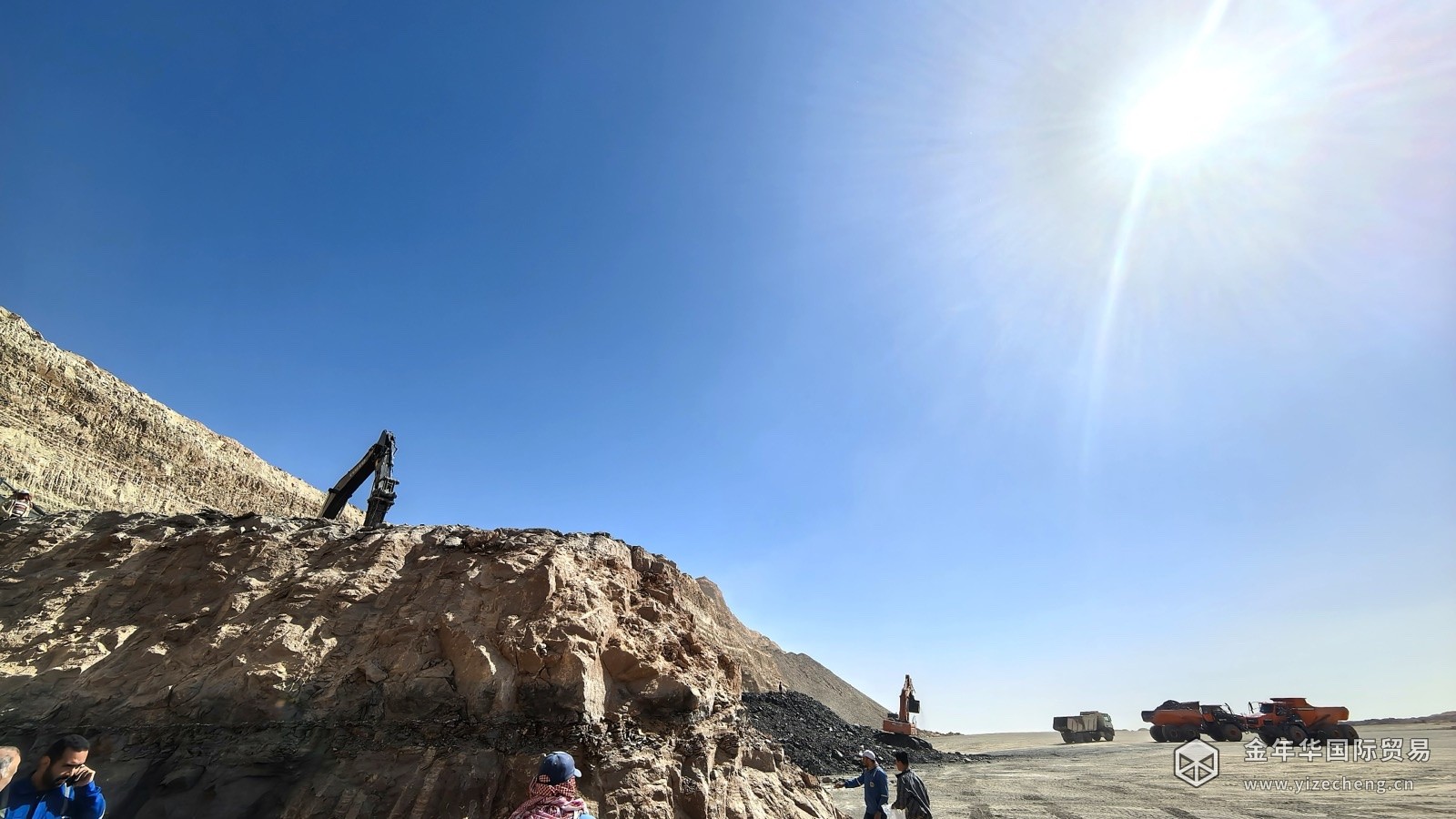
Longzhong Information’s 4 September price list for phosphate rock enterprises shows quotations across the main domestic producing regions holding broadly steady, with the change column for 3-4 September essentially at zero. Prices differ between regions, but within a single region grade tiers can move the quote by two to three hundred yuan.
In Hubei, 28% grade on a barge-board basis including tax traded at RMB 950-980/t, with modest discounts versus earlier levels; 25% high-magnesium rock on the same basis was around RMB 800-854/t; 23% high-magnesium rock RMB 630/t; 22% grade RMB 600/t; and 27% grade at RMB 900/t delivered. A 2 September phosphate fertiliser bulletin from Hithink RoyalFlush put the Hubei 30% grade barge-board average at RMB 1,050/t, broadly in the same band as Guizhou 30% on a truck-board basis at RMB 950-1,030/t.
In Mabian, Sichuan, 25% high-magnesium phosphate rock was quoted at RMB 650-680/t delivered to the county town, 22% grade at RMB 470-490/t, 21% grade at RMB 370/t, 33% phosphate concentrate powder at RMB 1,120/t, and 23% grade yellow phosphorus rock at about RMB 950/t delivered. In Weng’an, Guizhou, 27% run-of-mine was RMB 780/t at the pit head including tax, 28% on a truck-board basis was around RMB 900/t, 31% concentrate powder RMB 1,050/t and 33% concentrate powder RMB 1,100/t at the pit head; in Kaiyang, 30% grade on a truck-board basis including tax was RMB 950-980/t, with top quotes above RMB 1,020/t. Yunnan 28% grade was RMB 880-920/t delivered to the yard.
Northern material follows a different price structure. Hebei quoted 30% grade at RMB 830/t, 32-33% at RMB 1,000-1,010/t ex-works and 34-35% at RMB 1,040-1,050/t, all on a wet basis at 8% moisture with iron and aluminium content around 2%; Jianping, Liaoning quoted 32-33% grade at about RMB 890/t. One batch of 33% material with high iron and aluminium content was cut by RMB 60 to RMB 800/t. Same 33% label, different impurity figures, a RMB 200/t spread.
We broke down the grading logic and how impurities feed into pricing in Phosphate Rock Is Not One Thing: Rock Phosphate, Sedimentary Phosphorite and Grade Classification.
Imported Material: July Average USD 85/t, Egyptian Cargo at USD 95-100
Customs data show China imported 1.0157 million tonnes of phosphate rock in January-July 2026, with 17,500 tonnes in July alone, split into 10,700 tonnes unground and 6,842 tonnes ground. The July average import unit price was USD 85/t, USD 7 below the USD 92/t recorded in May. Longzhong notes that actual transaction prices vary with grade and origin, and that the ground portion is too small in volume to serve as a mainstream reference.
Unground phosphate rock in July came mainly from Egypt and Kazakhstan, at 15,800 tonnes from Egypt and 1,727 tonnes from Kazakhstan. Destinations were Guangxi with 14,400 tonnes, Xinjiang with 1,725 tonnes (mostly Kazakh material) and Guangdong with 1,368 tonnes.
On spot quotes, Egyptian 26-27% grade material was offered at USD 95-100/t CIF China, with freight still distorting the price; Batan-origin 28-30% grade traded steadily at USD 95-98/t CIF, while 25% grade was quoted at USD 70/t CFR, negotiable on firm orders, with cargo moving mainly to Guangdong, Shandong and the Yangtze River basin.
Longzhong adds that international phosphate rock trading is unremarkable: high sulphur prices have weakened ore demand, sellers are keener to move cargo, and arrivals in China are mostly against earlier orders, so the import pace has slowed.
Supply Is Contracting and Demand Is Not Keeping Up
Prices are holding mainly because of supply. Safety inspections have curbed output in Baokang, Hubei, and northern output is limited under the same checks; mines in Sichuan and Guizhou are being reorganised; the current round of environmental inspections in Sichuan is strict enough to have halted most mines; Leibo’s restart has been delayed; and flood season is complicating shipments from Mabian.
Demand is not strong. Ample inventories and pressured transaction prices in the ammonium phosphate market give limited support to phosphate rock, and the operating rate for wet-process purified phosphoric acid sits at around 40%, offering little lift either. Yellow phosphorus is running at high rates and remains one of the few steady sources of demand. Plants that had been idled have restarted gradually since the autumn ammonium phosphate season began, giving raw material demand some support, though not much.
Policy constraints last longer. Phosphate rock has been listed as a national strategic mineral, and the supporting regulations for the revised Mineral Resources Law took effect on 15 June, designating 36 categories of minerals, phosphate rock among them, as national strategic minerals for the first time. Mine safety circular [2026] No. 78 requires non-coal underground production mines to set up their own teams or move to full third-party management by 1 May 2027, and non-coal open-pit mines by 1 May 2028, with production suspension and rectification ordered for those that miss the deadline. The article Phosphate Rock Listed as a National Strategic Mineral covers the specific output control requirements.
What This Means for Procurement
- Compare on a like-for-like basis. Barge-board, truck-board and pit-head prices carry different tax treatments, and wet-basis moisture and iron, aluminium and magnesium impurity levels have to be aligned as well. The RMB 200/t gap between the two 33% grade batches above comes entirely from impurity specifications.
- Landed cost for imported material is falling. July averaged USD 85/t against USD 92/t in May. Beyond the CIF price come port charges, short-haul transfers and VAT; the full calculation method is set out in How to Calculate the Landed Cost of Imported Phosphate Rock.
- Domestic prices are firm while import quotes are loosening, and the relationship is shifting. Supply contraction makes domestic prices hard to push down, while freight and weaker demand have loosened import quotes. That spread is worth tracking monthly.
- The north-to-south flow of rock keeps growing. Longzhong notes that volumes of northern phosphate rock moving into the Yangtze River basin and Guangxi have risen markedly year on year over the past two years, with downstream buyers blending northern rock with local low-grade material. The blending ratio will shape demand for high-grade imported rock.
In the near term, Longzhong’s judgement is that the period of intense price contestation is over, prices will stay broadly stable, volumes are unlikely to improve markedly, and the longer-term trend depends on downstream operating rates.
Sources: Longzhong Information, Phosphate Rock Enterprise Price List (20260904), republished by Mysteel on 4 September 2026; Hithink RoyalFlush Finance, Ammonium Phosphate Prices Hold Steady (2 September 2026). All prices are tax-inclusive cash transaction references; firm orders are subject to negotiation.