

Phosphate rock is the material as it comes out of the ground; a phosphate concentrate is what that material becomes after beneficiation. The two are sold under the same broad heading, but they are not interchangeable. Beneficiation lifts the P₂O₅ content and pulls down the iron, aluminium and magnesium that a phosphoric acid plant has to deal with. On the same ore body, whether and how far it is beneficiated can move the P₂O₅ grade by more than ten percentage points and change the impurity load several-fold. It is the impurity load, more often than the headline grade, that decides where a cargo can actually go.
1. Phosphate Ore Beneficiation: What Separates Rock from Concentrate
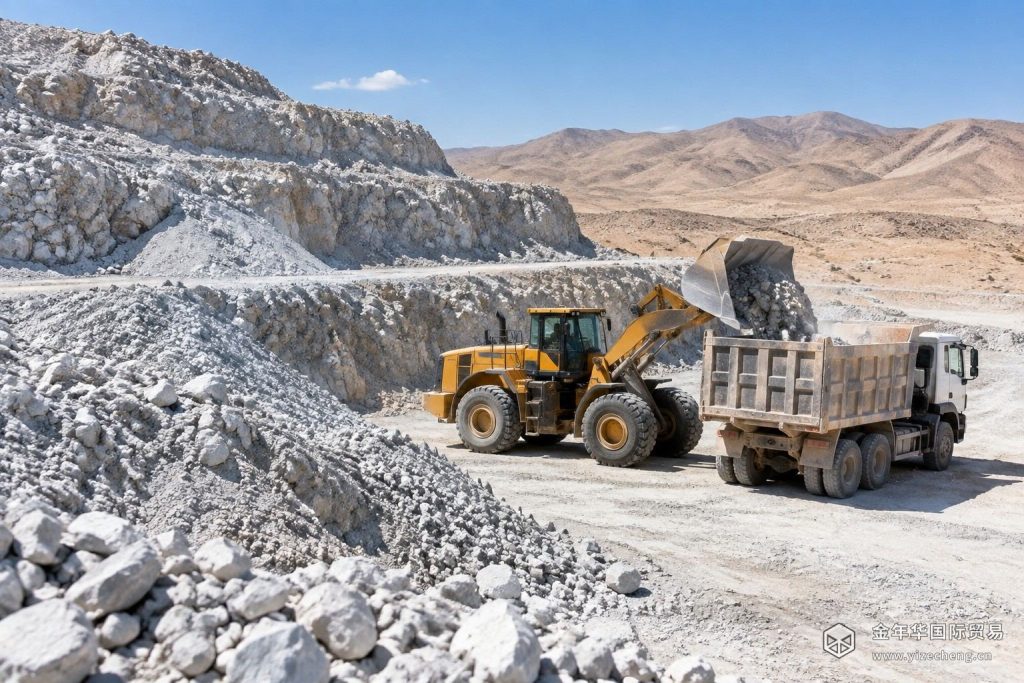
Run-of-mine phosphate is rock that has been drilled, blasted and crushed, with its grade set by the deposit rather than by the seller. Sedimentary phosphorite, which supplies most of the world’s trade, typically leaves the pit at roughly 15–25% P₂O₅, carrying quartz, clay and carbonate gangue alongside the apatite. Shipped in that state, a significant share of the freight bill is spent moving material the buyer cannot use.
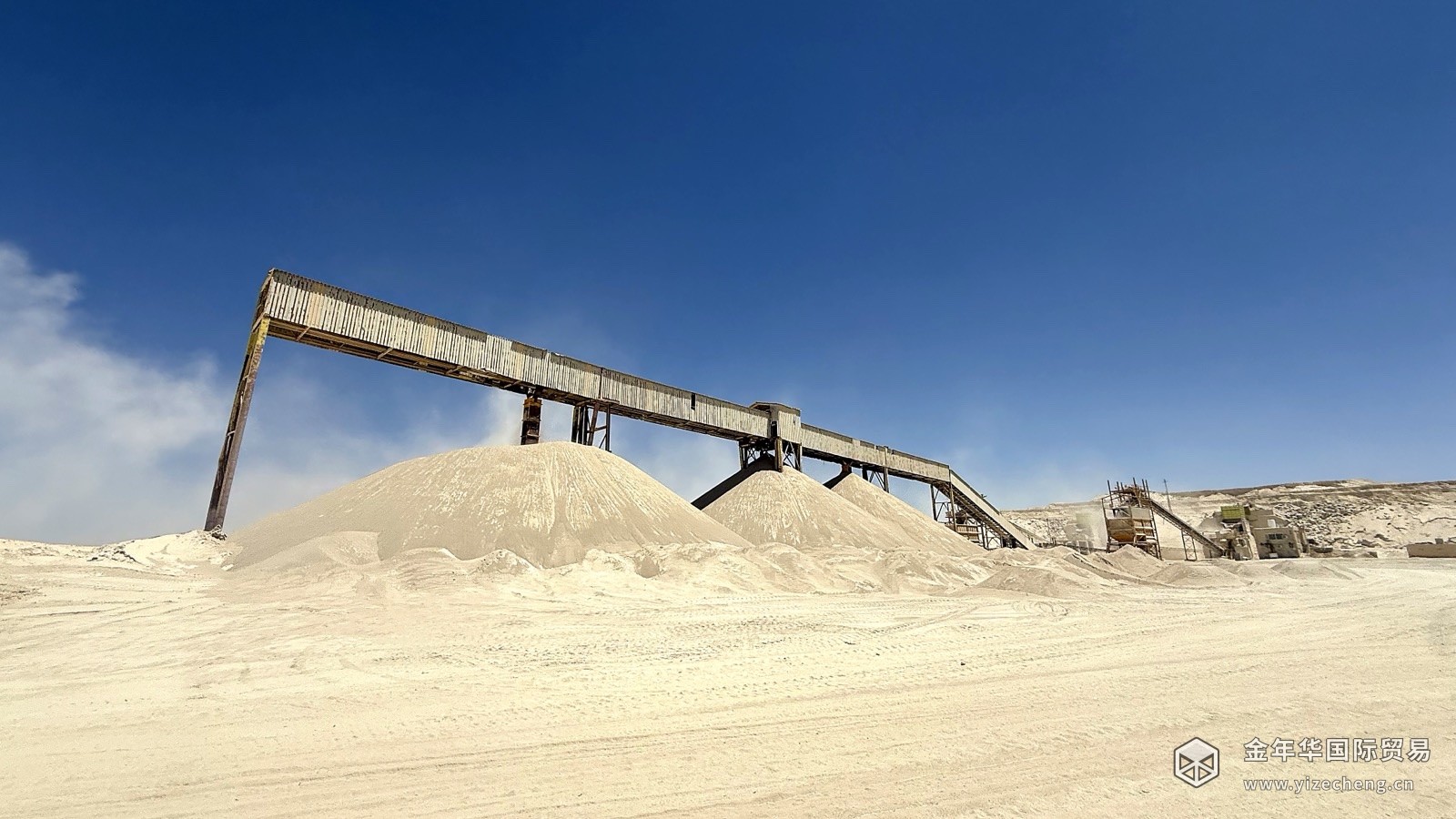
Phosphate ore beneficiation is the set of steps that changes this. A concentrator does two things at once: it raises P₂O₅ and it lowers the impurities. The USGS makes the distinction explicit in its own commodity reporting, defining “marketable product” as beneficiated phosphate rock whose P₂O₅ content is suitable for phosphoric acid or elemental phosphorus production, rather than the raw ore. The South Australian Department for Energy and Mining notes the same shift from the supply side: high-grade ore resources are declining worldwide, and beneficiation of lower-grade material by washing, flotation and calcining is becoming more widespread.
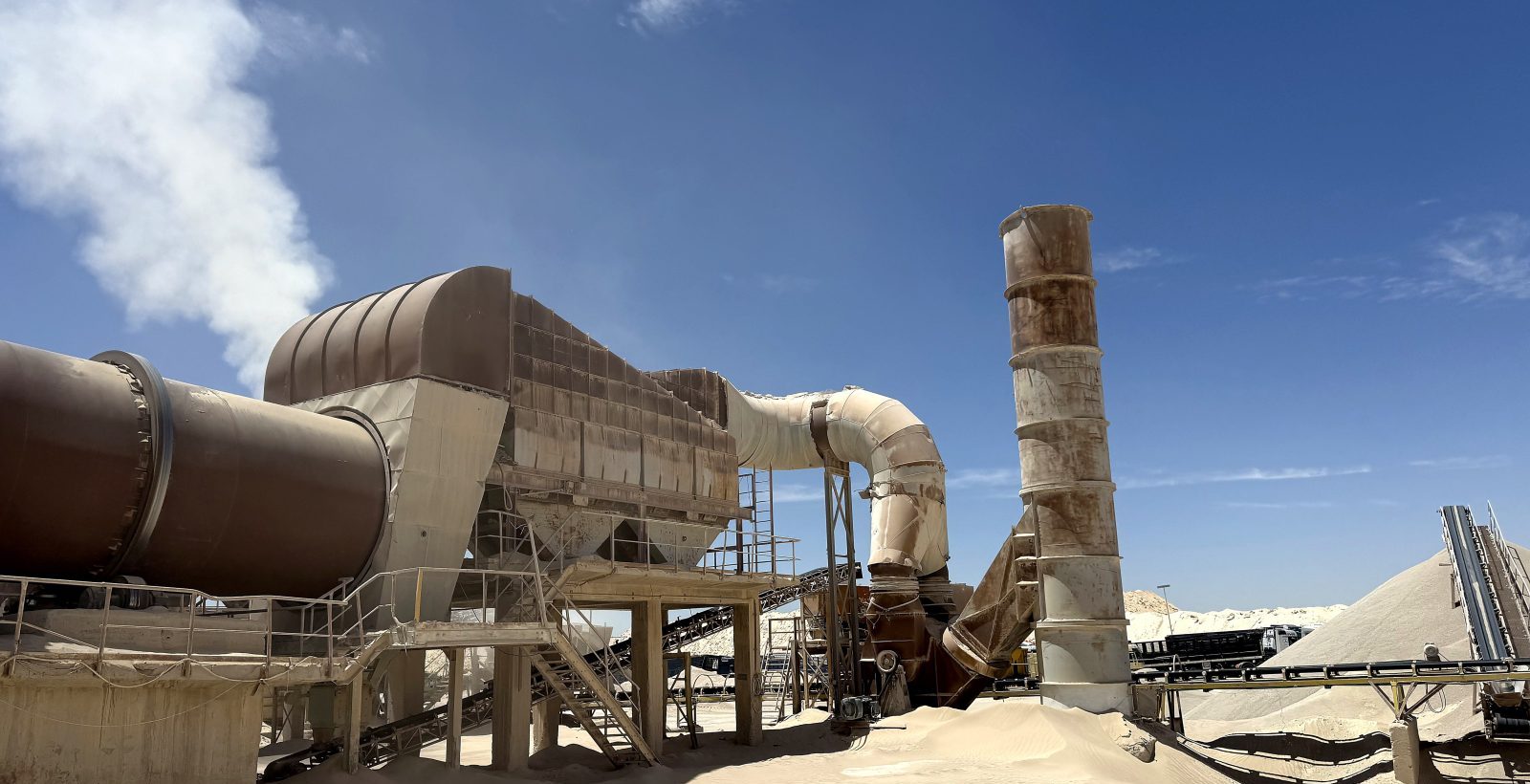
The route chosen follows the ore. Weathered, clay-rich rock is scrubbed and deslimed first, because slimes both dilute the product and consume flotation reagents. Where the phosphate mineral and the gangue differ enough in density, gravity separation does part of the work. Flotation is the most widely applicable method and is usually run as a pair of stages: a phosphate float, or a silica reverse float, to strip quartz, followed by a carbonate reverse float to pull down dolomite and calcite. Calcination removes carbonates thermally, but its energy and emissions cost has reduced its share in new projects.
2. Grade and Impurities: The Numbers That Decide the Destination
Buyers who treat P₂O₅ as the only specification tend to be surprised at the acceptance stage. Grade sets the pricing basis; the impurity profile decides whether the material can run at all.
For fertiliser use, the South Australian Department for Energy and Mining gives a working rule of thumb: rock or concentrate at approximately 30% P₂O₅, a reasonable calcium carbonate level (about 5%), and less than 4% combined iron and aluminium oxides. Concentrate specifications usually go further, with MgO below about 1% (0.5% is preferred) and a CaO/P₂O₅ ratio below 1.6, because both drive up sulphuric acid consumption in the wet process and increase the phosphate lost to gypsum. Typical beneficiation outcomes illustrate the spread between ore types:
| Ore type | Typical ROM, % P₂O₅ | Typical concentrate, % P₂O₅ | Main gangue removed |
|---|---|---|---|
| Sedimentary, siliceous (Morocco, Jordan, Tunisia) | 20–25 | 30–34 | Quartz, chert, clay |
| Sedimentary, carbonaceous (Florida, Togo) | 18–22 | 28–32 | Dolomite, clay |
| Igneous apatite (Russia, Brazil, South Africa) | 5–15 | 35–39 | Carbonatite, magnetite, silicates |
| Weathered (Senegal, parts of India) | 15–22 | 28–31 | Kaolinite, iron oxides |
The effect on the impurity side can be as large as the effect on grade. A published two-stage flotation study on Syrian ore reached a blended concentrate of 34.78% P₂O₅ with Fe₂O₃ at 0.37%, Al₂O₃ at 0.32% and MgO at 0.56%, starting from an ore whose CaO/P₂O₅ ratio was above 2. Recovery is the other half of the equation, and it is never free: a working range across phosphate circuits is 85–90% P₂O₅ recovery on simple siliceous ore and 75–85% on carbonaceous ore, with the balance reporting to tailings.
The practical consequence is that a concentrate is not simply “better rock”. Grade above roughly 32% P₂O₅ carries a premium in phosphoric acid production, because every extra point of P₂O₅ cuts the sulphuric acid needed per tonne of P₂O₅ recovered. A concentrate only pays for itself, however, when the grade uplift and the impurity reduction are worth more than the beneficiation cost plus the yield loss. On long sea routes the arithmetic often favours the concentrate, since less unusable tonnage is being carried.
3. What Buyers Should Specify
Three items have to be settled separately for the two forms, and mixing the two basis sets is a common source of settlement disputes.
- Pricing basis. Run-of-mine cargoes are usually priced in P₂O₅ bands with a penalty below a floor grade. Concentrate contracts price on grade plus explicit penalties or bonuses for combined iron and aluminium, MgO and moisture. Apply one form’s penalty table to the other and a dispute is almost certain at settlement.
- Size and moisture. Rock ships as lumps and fines, and the lump-to-fines ratio affects discharge and milling cost. Concentrate is a fine powder: free-flowing, but more sensitive to dust control and to moisture swings. Where a cargo will be exported, moisture should be agreed alongside size and handling method, not as an isolated ceiling.
- End use. Around 90% of phosphate mined becomes fertiliser. Ground rock can feed certain fertiliser and feed-grade products directly; a high-grade, low-impurity concentrate is the preferred feed for wet-process phosphoric acid, where buyers read the impurity table before the grade table.
Buying notes for industrial mineral buyers
Confirm first which form is on offer, then test against that form’s specification. A run-of-mine grade sheet and a concentrate grade sheet are not comparable on P₂O₅ alone. Ask for a lot-specific certificate of analysis issued against the actual shipment, covering P₂O₅, CaO, MgO, Fe₂O₃, Al₂O₃ and SiO₂, and agree the sampling and inspection scope before loading so that both sides test the same material.
Frequently asked questions
Is a concentrate always more expensive than rock? Not necessarily. The price gap has to cover the beneficiation cost and the yield loss as well as the grade uplift. On long routes the concentrate can win on freight alone, because a higher proportion of what is shipped is P₂O₅.
Is imported rock phosphate usually sold as ore or as concentrate? Both, depending on whether the mine runs its own concentrator. Buyers should confirm the contract basis and request the assay for that specific form rather than assuming one or the other.
Does a P₂O₅ figure on its own tell me enough? No. P₂O₅ sets the price; MgO, Fe₂O₃, Al₂O₃ and SiO₂ decide process suitability and acid consumption. A specification that reports grade without the impurity items is incomplete for a phosphoric acid buyer.
To review the grades we supply, see our phosphate rock product range; ore characteristics for a common North African origin are described on the Egyptian rock phosphate page, and published price observations are collected on the market watch page.
Sources
Grade and impurity guidance follows the Department for Energy and Mining, Government of South Australia (“Phosphate”). Ore-type and concentrate-grade ranges reflect conventional phosphate beneficiation practice as published in industry and conference literature. The two-stage flotation figures are from a published study on Syrian phosphate ore. Production and definitional data are from the USGS Mineral Commodity Summaries 2026 (phosphate rock), released February 2026.
Related Reading
- How to Choose a Mineral Supplier: Evaluation and Risk Control
- More Than One Kind of Phosphate Rock: Sedimentary, Igneous and Grade Classification Explained
- Phosphate Rock & Calcium Carbonate Contract and RFQ Templates
- Rock Phosphate HS Code and Export Documentation: What Global Buyers Should Fix Before Loading