

Disruption on the Red Sea route has run on since 2024, and its effect on mineral imports lands in two places: some services reroute around the Cape of Good Hope, lengthening the voyage, while freight rates on other services are pushed up directly. Bulk and container shipping have not been affected in the same way, and arrival windows have diverged as a result.
1. How Disruption Feeds Into Freight Rates
The Red Sea and the Suez Canal are the essential channel for Asia–Europe services. Rerouting around the Cape of Good Hope adds several thousand nautical miles to a one-way voyage. Vessel turnaround times lengthen, which is equivalent to withdrawing a slice of available capacity from the market. Shrinking capacity on top of rising insurance costs pushes freight rates up as a matter of course.
That transmission works differently across ship types. Container liner services run fixed routes on dense schedules, so the capacity loss from rerouting shows up directly in the freight rate indices. Bulk carriers are more flexible: whether a vessel reroutes depends on the charterer’s trade-off between time cost and freight rate, and the effect appears as cargo parcels switching routes and as a higher central level of charter rates on some services.
2. Bulk and Container: The Divergence
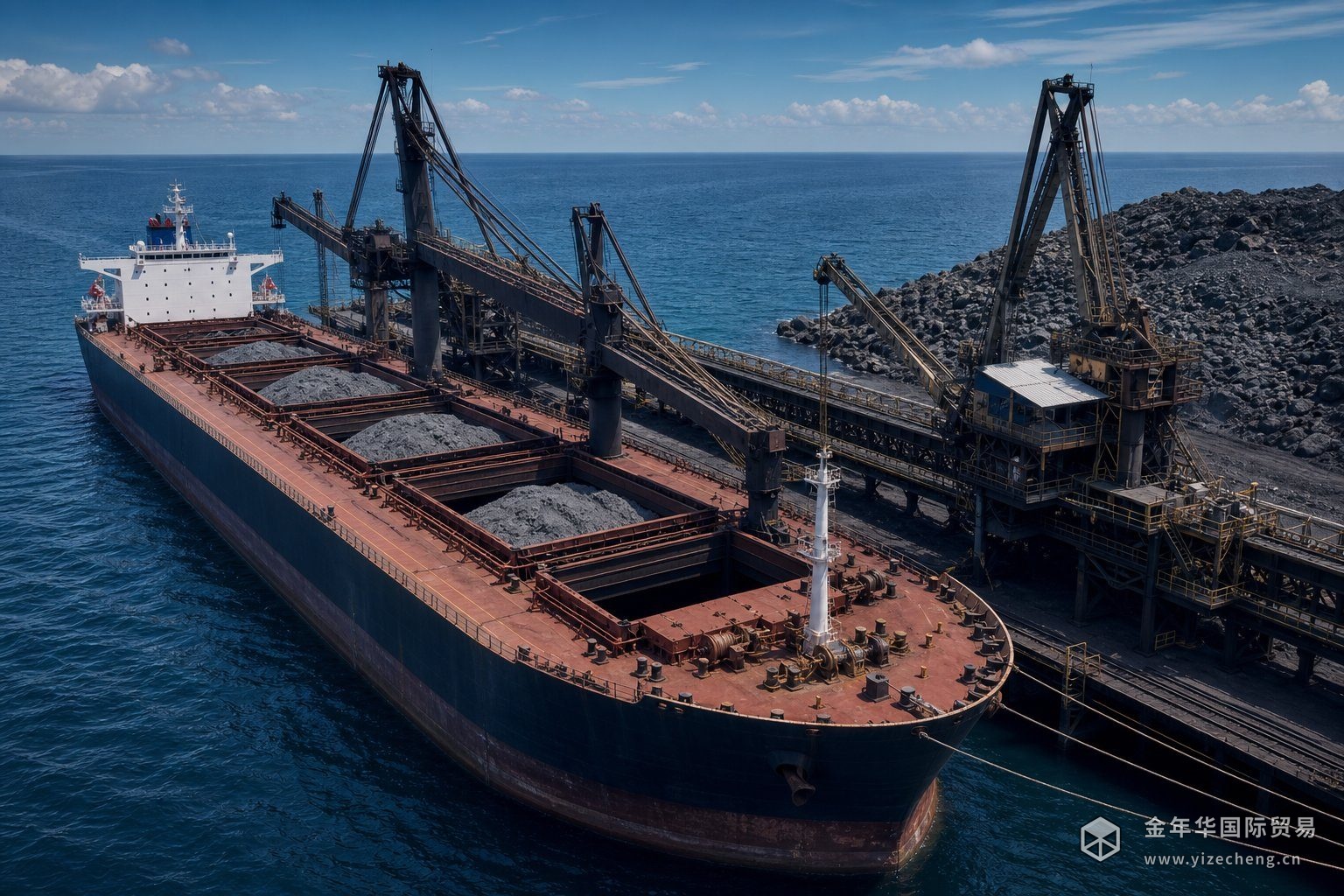
Bulk commodities such as phosphate rock and iron ore almost all move by bulk carrier, and freight accounts for a substantial share of the CFR price. A higher central freight level lifts landed cost with it, and because that increase is independent of cargo value, low-grade ore is squeezed harder than high-grade ore.
Calcium carbonate powder and small parcels of speciality minerals move mainly in containers. Container freight rates went through a clear upward run from the second half of 2025 into the first half of 2026, with Middle East and Persian Gulf services rising more sharply than the US West and US East coasts under the combined effect of Red Sea and Hormuz disruption. Cargo moving in containers is naturally more sensitive to freight.
The difference between the two cargo types gets amplified when rates move. When freight is stable, choosing between bulk and container is mainly about volume and transit time; when rates diverge, the choice itself is worth money. The framework is in Bulk or Container: Which Saves More on Mineral Imports?.
3. The Effect on Arrival Windows
Longer voyages bring more than freight cost; they bring timing. A voyage that used to take around 30 days becomes 40 or more, the delivery window in the procurement plan shifts back as a whole, and the turnover days of buffer stock have to be recalculated.
For downstream plants running continuously, that change is more troublesome than the freight. Freight can be negotiated and locked; a shifted arrival window is a hard constraint. Most plants respond by lifting the safety stock line by one notch, or by staggering arrivals away from peak season. The BDI touched 3,200 points at one stage in the first half before falling back to the 2,500–2,600 band in June and July, still a stronger central level than in previous years; the fuller data set is in How Rising Ocean Freight Affects the Landed Cost of Imported Minerals: September Update.
4. What Buyers Can Do
- Lock freight on term. When rates are volatile at a high level, fixing a period charter or a longer-term contract with an owner or forwarder is steadier than chasing the spot market.
- Ship off-peak. Rates get bid up around the pre-holiday rush; where a shipment can be brought forward, bring it forward.
- Do not tie yourself to one load port. Jordan, Egypt and Morocco sit on different routes with different freight structures, so diversifying sources is itself a way of spreading freight risk.
- Watch two risk points. Low-water draft restrictions at the Panama Canal and the situation around Hormuz; any escalation would send rates on the relevant routes higher again.
One further point is worth making. If a supplier quotes CIF, the ocean freight risk sits with the seller and the premium is already inside the price. If the quote is FOB, freight and insurance are the buyer’s to carry. The two terms produce a completely different view of cost, and How to Calculate the Landed Cost of Imported Phosphate Rock works through a comparison of both.
Conclusion
The Red Sea disruption affects mineral imports in two ways at once: higher freight rates and longer arrival windows. The first can be managed through term contracts and the choice of Incoterms; the second can only be absorbed through inventory policy. It is worth shortening the review cycle on procurement plans rather than applying the rhythm of last year’s calm market to this year’s routing situation.
Related Reading
How Rising Ocean Freight Affects the Landed Cost of Imported Minerals: September Update