

Iron Oxide Yellow
Industrial-grade iron oxide yellow for pigments, coatings and building material colouring — consistent quality and continuous supply.
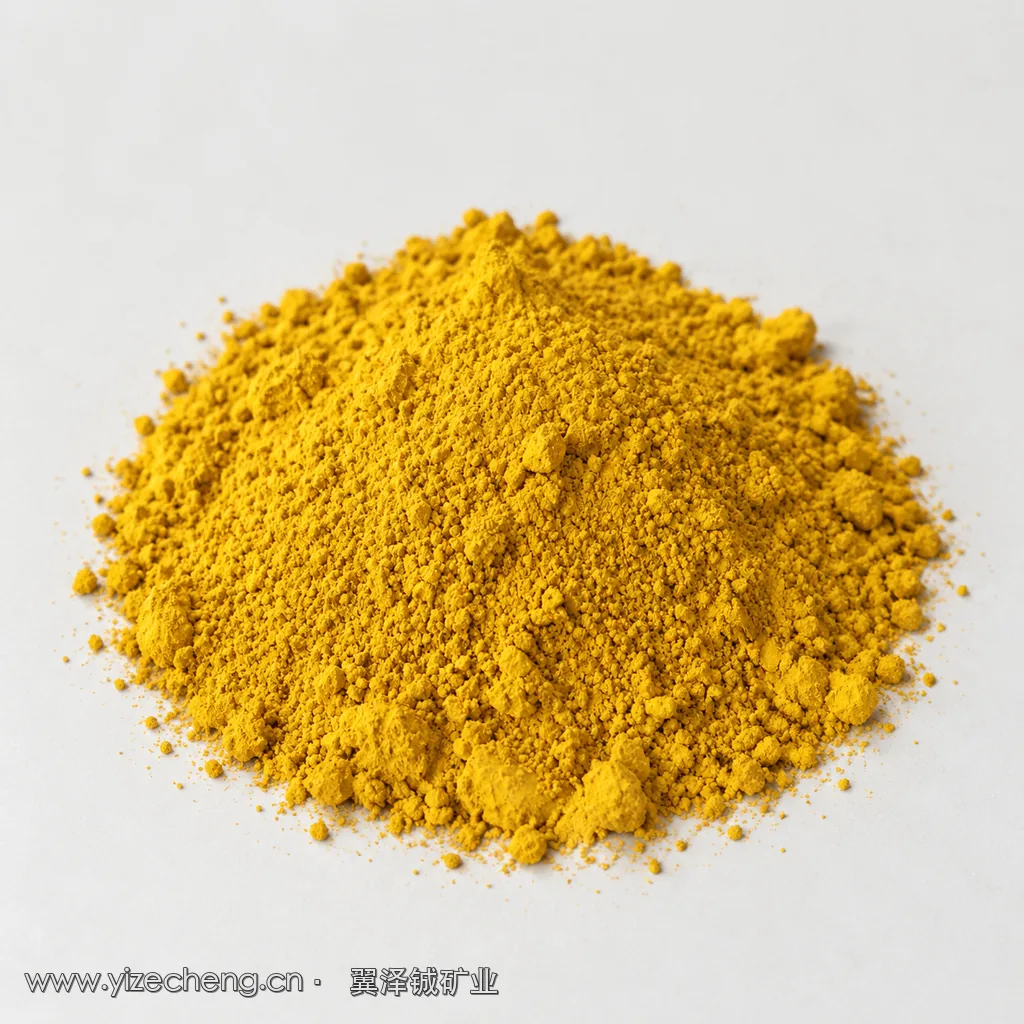
Ore Properties & Applications
Industrial-grade iron oxide yellow with stable colour and continuous supply, suited to pigments, coatings and building material colouring. Available as lumps or fines to suit your process.
- Fe Content: per assay report
- Particle Size: Lumps / Fines
- Packaging: Bulk
Applications: Pigments, coatings and construction colouring.
Request a Quote →Gallery
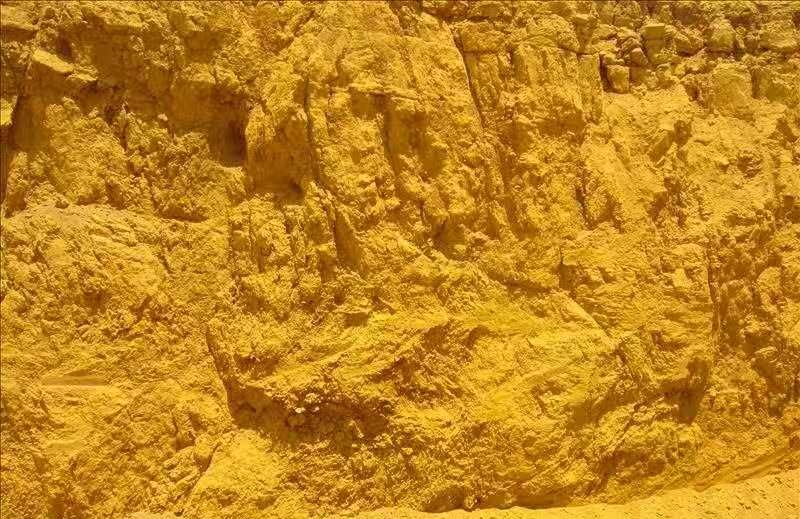
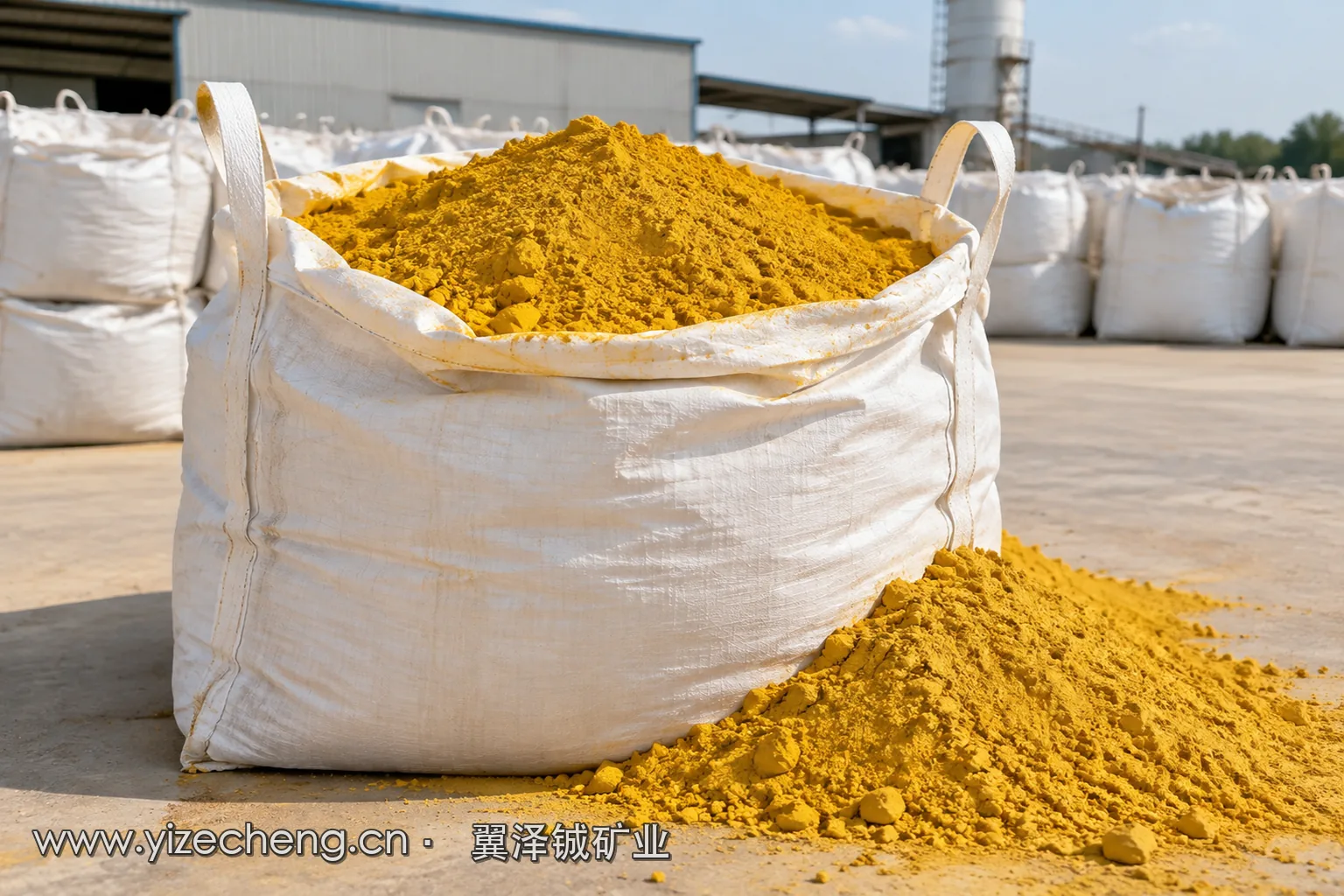
Photos of the ore — a clear look at the product appearance.
Need a quote for iron oxide yellow?
Tell us your particle size and volume — we reply with a proposal within one business day.
Choosing iron oxide yellow: indicators, grades and applications
Iron oxide yellow is the most fundamental and widely used yellow among synthetic inorganic pigments. Chemically stable, with strong tinting strength and excellent lightfastness, it is used in architectural coatings, paints, inks, plastics and rubber. For buyers the question is not simply "is it iron oxide yellow" but which indicators determine the appearance and durability of the finished product.
Tinting strength: the indicator that drives dosage
Tinting strength is the amount of pigment needed to reach a defined colour concentration. Higher tinting strength means lower dosage and lower cost. This is the first indicator to confirm when buying — the same grade can differ enough to change total cost materially. Comparisons are only meaningful if the same standard test formula was used.
Colour and shade: batch consistency matters more than a single passing batch
Because it is used as a colorant, colour consistency directly affects the appearance of the finished product. Variations in raw material or process conditions can shift shade, so agree a tolerance (against a reference sample or a defined ΔE) and require per-batch test data. For large or split orders, cross-batch consistency often matters more than whether any single batch passes.
Fineness and dispersibility: what prevents mottling
Coarse pigment powder disperses poorly and causes specks or mottling in coatings. Watch the fineness specification and dispersibility, and state whether surface treatment is needed for compatibility with the binder. Poor dispersion means an unacceptable finish even when tinting strength meets spec.
Dispersants and additives: do not focus on the main pigment only
In practice iron oxide yellow is used with dispersants and coupling agents. Changing pigment without adjusting the dispersion system can shift both viscosity and colour. It is more effective to discuss the whole formulation and ask the supplier to advise against your specific system than to compare price in isolation.
Lightfastness and weather resistance: match to the application
Iron oxide yellow is generally lightfast, but grades still differ in weather resistance and heat stability. Exterior coatings and architectural colouring demand higher weather resistance; plastics and rubber processing care more about heat stability at processing temperature. Confirm the end-use environment and processing conditions before choosing the grade.
Delivered cost and supply cadence
Iron oxide yellow prices are relatively low, so terminal charges and demurrage spread over a tonne are not negligible and booking efficiency affects delivered cost. Confirm the supplier's ore source and processing capacity — channels that only repack and resell tend to run short or vary in batch during peak season or port congestion. We supply both lump and powder forms matched to your process.
Iron oxide yellow buying — where to read next
Iron oxide yellow: common questions
Q1: iron oxide yellow vs chrome yellow vs organic yellow?
Iron oxide yellow offers better lightfastness and chemical stability than chrome yellow (lead-based, restricted by toxicity and sulphide staining) and differs from organic yellows (high tinting strength but limited lightfastness). For architectural and automotive coatings where durability matters, iron oxide yellow is usually the sound choice; organic yellows are worth considering only where very high tinting strength is needed and weather resistance is not critical.
Q2: how do we confirm the shade difference is acceptable?
Agree in the contract how shade tolerance is judged — reference sample comparison or a defined ΔE — and require per-batch test data. For a first purchase, trial a small lot to confirm compatibility with your system before scaling up.
Q3: powder or lump?
It depends on your process. Your existing grinding equipment, dispersion system and dosing arrangement determine which form fits better. We supply both lump and powder forms and can match them to your process.
Q4: how do we control batch risk on larger volumes?
Agree batch acceptance criteria, require a test report with each shipment, and introduce third-party sampling and re-testing at larger volumes, with the dispute mechanism written into the contract. Keep the supply cadence stable to avoid batch drift from frequent source switching.